[News] UMC, HyperLight Team up to Mass-Produce TFLN Chiplets, Targeting 1.6T Data Center Bandwidth
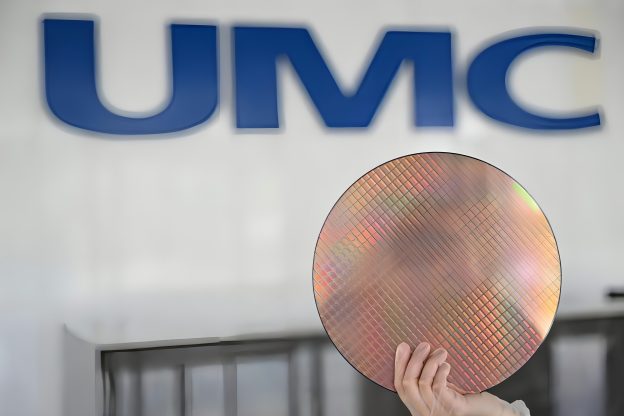
As traditional copper-based electrical transmission reaches physical limits, the semiconductor industry is increasingly turning to optical transmission technologies, with UMC joining the trend. HyperLight and UMC, along with the foundry’s wholly owned subsidiary Wavetek, announced a strategic partnership to mass-produce HyperLight’s TFLN (thin-film lithium niobate) Chiplet Platform on 6-inch and 8-inch wafers.
According to UMC’s press release, the collaboration represents a major milestone in commercializing TFLN photonics. G C Hung, Senior Vice President of UMC, noted that to achieve 1.6T bandwidth and beyond, TFLN is emerging as a promising material to deliver the bandwidth requirements for next-generation data center connectivity.
UMC explains that the TFLN Chiplet Platform, designed from inception to enable AI-infrastructure-scale production, unifies the requirements of short-reach IMDD-based data center pluggables, longer-reach coherent-based datacom and telecom modules, and co-packaged optics (CPO) within a single high-volume manufacturable architecture.
Under the partnership, HyperLight acts as the platform architect, while UMC and Wavetek provide the high-volume foundry capacity needed for global deployment. Building on HyperLight’s long-term work with Wavetek, which scaled TFLN photonics from lab innovation to a customer-ready 6-inch HVM line, UMC adds its 8-inch production expertise to support the large-scale demands of AI infrastructure, the company said.
According to UMC, the TFLN Chiplet Platform enables fundamental performance gains including extreme high modulation bandwidth, CMOS-level drive voltage and ultralow optical loss. For AI networks across all interconnect distances, TFLN reduces laser consumption and supports CMOS direct-drive voltage, lowering power consumption as lane speeds continue to scale. For emerging applications like quantum computing and sensing, the TFLN Chiplet platform enables the extreme performance required at scale as well.
Notably, UMC is also betting on silicon photonics. In late 2025, the company announced a licensing agreement with imec to acquire the iSiPP300 silicon photonics process, featuring co-packaged optics (CPO) compatibility, to accelerate its silicon photonics roadmap. According to UMC’s press release, the licensed technology will allow the company to bring a 12-inch silicon photonics platform to market for next-generation connectivity.
Read more
- [News] UMC Licenses imec’s iSiPP300 to Advance Silicon Photonics, Eyes 2026–27 Risk Production
- [News] Silicon Photonics Momentum Builds: Samsung Ramps R&D in Singapore, UMC Teams With IMEC
(Photo credit: UMC)
Please note that this article cites information from UMC.