[Sponsored Content] How Advantech and AIRECO Are Rewriting the Rules of Recycling with AI
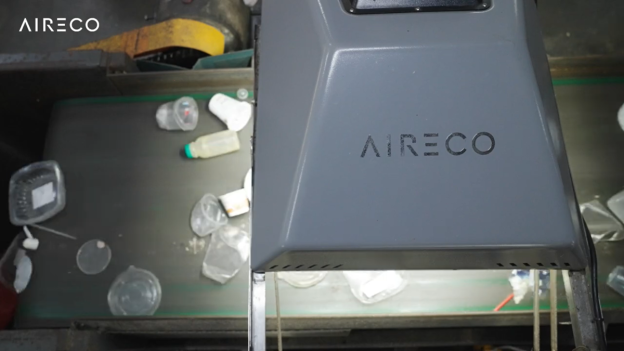
Advantech’s MIC-711 AI system powered by NVIDIA Jetson Orin™ NX, featuring low cost and high scalability while capable of operating normally in harsh environments such as high temperatures, humidity, and dirt, has long been the optimal tool for many enterprises deploying their first practical AI projects. AIRECO, which has been selected for both the NVIDIA Inception Program and the Silicon Valley Plug and Play accelerator, is actively assisting recycling plants in establishing such edge AI systems. AIRECO aims to achieve a transformation towards full automation and intelligence, striving to jointly build an AI-driven resource recycling ecosystem.
According to the World Bank’s statistics, the total volume of global municipal solid waste reached 2.01 billion tonnes (metric tons) in 2016 and is projected to rise to 3.4 billion tonnes by 2050, an increase of approximately 69%. Of this, it is estimated that only about 13.5% of waste is recycled and 5.5% is used for composting, resulting in an overall reuse rate of 19%. The report also estimates that between one-third and 40% of waste is directly dumped or openly burned without proper treatment.
Greenpeace also points out that between 2019 and 2023, the total annual volume of general waste in Taiwan consistently exceeded 10 million tonnes. Furthermore, statistics from Taiwan’s Ministry of Environment (formerly the Environmental Protection Administration) indicate that the total volume of general waste in Taiwan was approximately 10.06 million tonnes in 2021, increasing to about 11.23 million tonnes in 2022, a year-on-year increase of roughly 11.7%. With a recycling rate as high as 61.1% in 2021, the data shows that Taiwan’s waste recycling rate ranks among the top in the world. Empowered by edge AI systems, resource recycling rates are poised to reach new heights.
Intelligent Identification: Linking Three Key Nodes of Recycling Ecosystem
Intensifying labor shortages in recent years have precipitated an operational crisis for recycling operators, who rely heavily on manual labor for identification and sorting. With industries united in the urgent search for a solution, AIRECO was founded to address this challenge by providing specialized industrial automation.
Lee Chieh-Han, Co-Founder and CTO of AIRECO, states that his company originally started as an internal R&D startup division within the resource recycling company Shyechih Enterprise. Its purpose was to develop automated equipment to reduce excessive reliance on manual labor. Subsequently, the team discovered that if AI could be used to understand all types of waste, it would generate more business opportunities across various application markets, leading to the company formally spinning off from its parent corporation.
Lee points out that since its inception, AIRECO has focused on using computer vision and AI image recognition technology to create solutions capable of identifying various types of waste. This is aimed at enhancing precision and processing efficiency—factors difficult to balance with manual identification and sorting—and further improving speed, cost-effectiveness, and overall operational quality. Ultimately, this effectively addresses the pain points faced by different roles within the resource recycling ecosystem, from manufacturers and household users to recyclers.
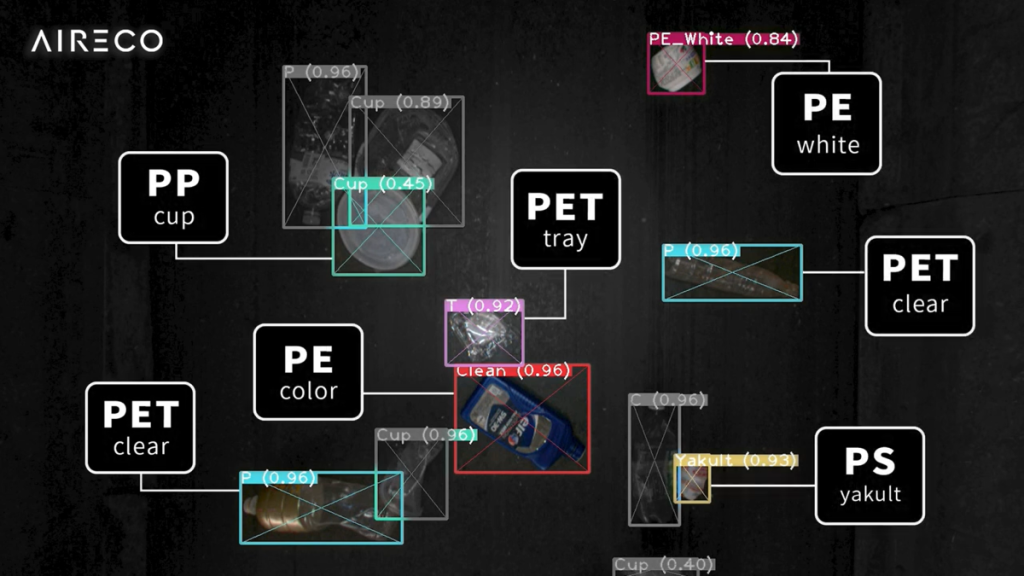
For recyclers, the primary challenge remains the labor shortage previously highlighted. By integrating AI with automation equipment, operators can reduce their reliance on manual sorting while significantly boosting the precision, speed, and efficiency of resource recovery.
Within this ecosystem, the consumer is the critical node determining whether a resource enters the recycling stream. AI can assist consumers in identifying the value of recyclable items, thereby increasing the likelihood of recovery and reuse. To this end, AIRECO plans to launch a new service soon designed to help households easily determine the recycling value of their waste.
For manufacturers, the main problem at the present is the lack of connection with recyclers. The solution is to use AI to analyze waste data and send feedback to producers. This helps them create greener product designs that are easier to recycle.
Lee explains that AIRECO’s goal is to use AI to bridge the historical divide between production, usage, and recycling. By uniting these traditionally isolated stages, the company aims to unlock greater synergy and collaboration across the entire ecosystem.
Lowering Annotation Costs and Boosting Efficiency with Three Core Technologies
Initially, AIRECO invested heavily in developing computer vision systems, utilizing convolutional neural network (CNN) deep learning models to identify waste imagery. When the company was founded three years ago, the process required capturing extensive images of diverse waste using industrial cameras and then manually annotating them to train the AI. This manual labeling was time-consuming, labor-intensive, and prone to human error.
To handle real-time AI inference on conveyor belts, the team initially used PCs equipped with expensive, high-end consumer graphics cards. However, these custom-built units were bulky, occupied valuable space, and incurred high setup and maintenance costs. After evaluating various industry options, the team found that using NVIDIA Jetson Orin NX edge computing devices addressed these issues perfectly. Consequently, AIRECO selected the Advantech MIC-711 Edge AI system as the optimal solution for reliable, real-time AI inference in recycling plants.
In 2025, following its selection for the NVIDIA Inception Program and the Silicon Valley Plug and Play accelerator, AIRECO integrated advanced simulation tools, including NVIDIA Omniverse, Isaac Sim, and Omniverse Replicator. The company utilized Omniverse and Isaac Sim to construct a “virtual recycling facility” capable of simulating 3D waste with varying shapes, materials, and contamination levels. Additionally, by leveraging Replicator to automatically generate massive quantities of annotated training data, AIRECO achieved significantly higher precision and cost-efficiency compared to traditional manual methods.
To drive recycling efficiency, AIRECO provides clients with three core technologies: RECO Vista (AI image recognition and quality inspection), RECO Delta (fully automated high-speed sorting robotic arms), and RECO Cognita (a visual smart management platform). When paired with the aforementioned simulation and training tools from NVIDIA, these three technological solutions facilitate a seamless transition from labor-intensive operations to automated, intelligent recycling.
Built for Extreme and Low Latency: Why Edge AI Is the Most Cost-Effective Choice for Dirty Jobs
Despite the current abundance of large-scale computing platforms and cloud services such as GPUaaS, Lee says that these options remain prohibitively expensive for resource recycling operators. More importantly, due to latency issues, cloud-based AI computing is unsuitable for real-time AI inference on recycling plant production lines. Edge computing devices, such as the Advantech MIC-711 series, represent the best choice.
Furthermore, recycling plants—often constructed as corrugated metal sheds—are not only high-temperature environments but are also filled with waste of various materials, shapes, and levels of grime. Facing such harsh conditions, AIRECO’s RECO Vista, equipped with the low-power MIC-711 series, can be easily installed onto existing production lines and operate smoothly and reliably.
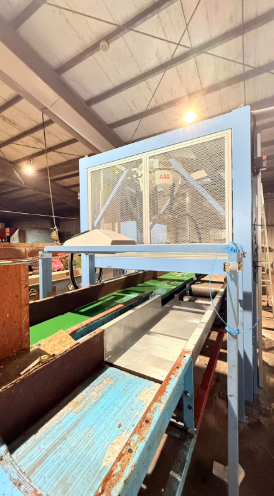
Because recycling plants require a high density of AI units, traditional solutions relying on expensive PCs and high-end graphics cards are economically unfeasible. On a single conveyor line alone, edge AI devices are essential at the front-end for material categorization and at the back-end for quality inspection. Furthermore, every robotic arm requires its own dedicated computing unit. To illustrate this scale, a Pingtung plant processing 2,000 tons monthly has deployed approximately 20 such edge AI devices.
Maximizing Value: Slashing Labor Costs by 80% via Standardization
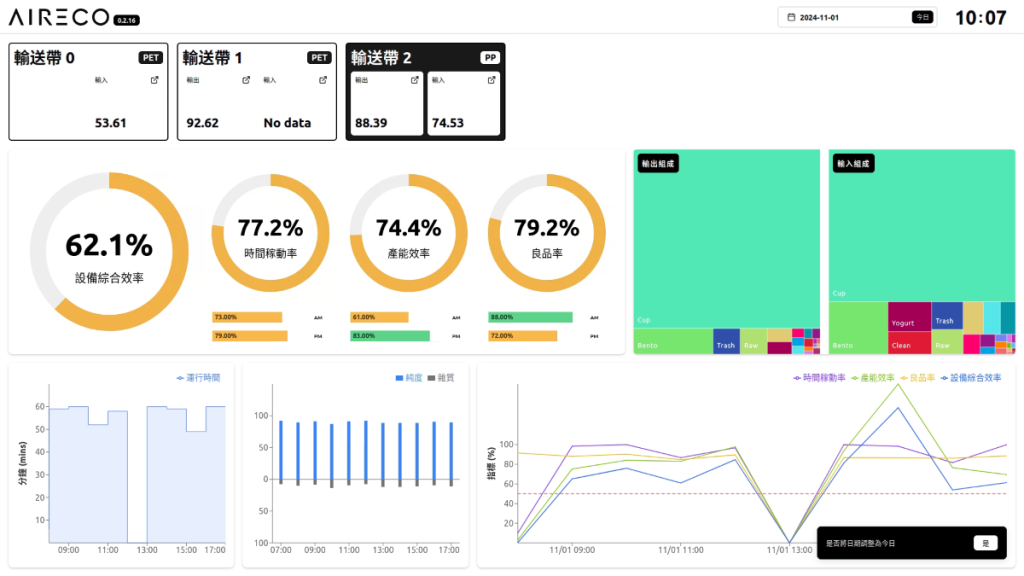
Addressing the issue of optical sorters requiring regular calibration, Advantech’s edge AI devices provide monitoring data that serves as a benchmark for determining exactly when the equipment needs calibration. These devices also record sorting operations on a minute-by-minute basis, serving as a reference for management during quality control spot checks or for future adjustments. Furthermore, the robotic arms on the production line rely entirely on real-time coordinate information provided by these edge AI devices to execute sorting tasks with precision.
Lee notes that although AIRECO has been established for less than three years, the implementation of the Advantech MIC-711 series has already delivered tangible benefits to the company and recycling plants. The most significant benefit is the substantial reduction in labor requirements, based on the estimate that one robotic arm can replace 0.8 human workers. Secondly, the comprehensive digitization of recycled material inspection allows recyclers to ensure the quality and value of their materials backed by concrete data.
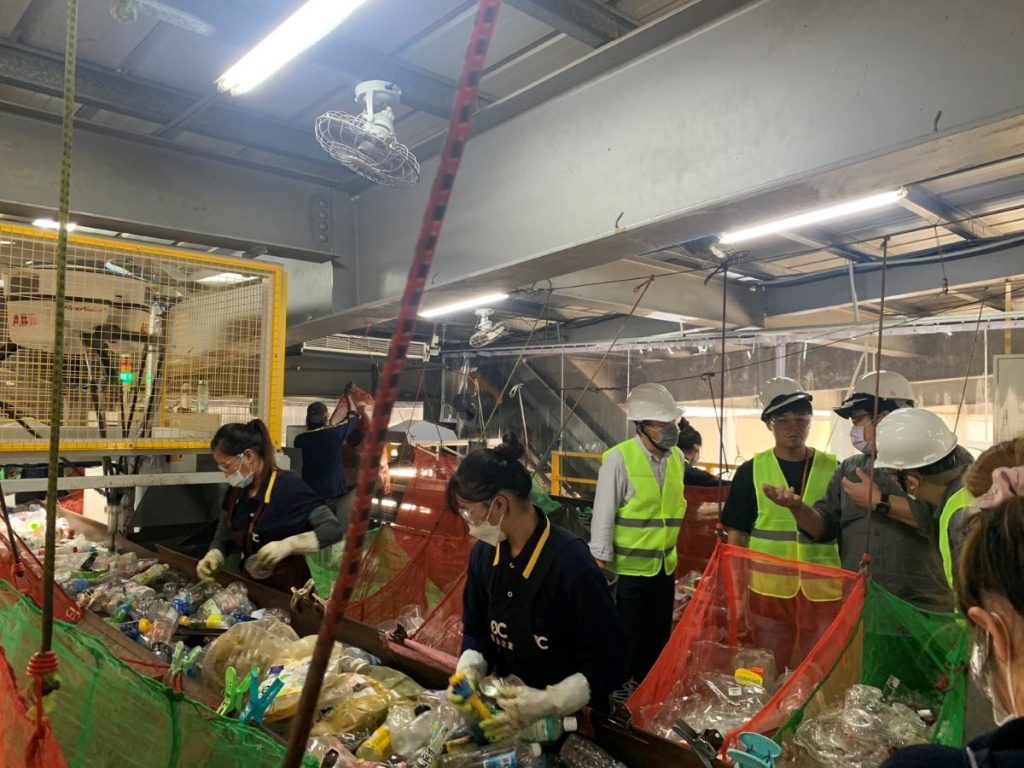
Ultimately, AIRECO drives the digitization of recycling through AI. By deploying a consistent model across the production, consumption, and recycling nodes, the company achieves full standardization, laying the foundation to maximize the residual value of waste.
With Taiwan’s high recycling rate of 60% serving as a proving ground, AIRECO is poised for global expansion. Although the Asian market’s current recycling rate is just 15%, the sheer volume of waste is 50 times that of Taiwan, representing a massive untapped opportunity. To capture this market, AIRECO is actively deploying its AI resource recycling ecosystem to secure a place in the global green supply chain. With the powerful support of edge AI systems, this ambitious roadmap is being realized at speed.
To learn more about Advantech AI solutions 👉 Edge AI Systems – Advantech
To consult with an Advantech expert 👉 Contact Us
(Image source: AIRECO)