[News] Multiple Semiconductor Firms Implement Price Hikes
The semiconductor market has undergone significant changes recently, with a massive wave of price increases sweeping across the industry.
Following previous announcements from Chinese firms such as Cmsemicon and Goke Microelectronics regarding price adjustments for specific product lines, several domestic semiconductor companies have followed suit.
Among them, memory manufacturer Puya Semiconductor stated that prices for some of its storage chip products have been adjusted within a reasonable range.
Additionally, media outlets such as Yicai have reported that companies including MAXIC, Kiwi Instrument, and Injoinic have also kept pace with market trends by announcing their own price hikes, further intensifying the upward pricing momentum for domestic semiconductors.
Puya Semiconductor: Moderate Increases in NOR Flash Prices
Puya Semiconductor recently disclosed in an investor relations record that its NOR Flash products are currently maintaining a rhythm of steady and moderate price increases. A price recovery trend has already emerged for small-to-medium capacity NOR Flash products. Due to the interconnected nature of NOR Flash production capacity, large-capacity products—which possess higher unit value and consume more capacity—experienced price adjustments earlier in this cycle due to supply shortages and stimulated demand. These increases are now gradually being transmitted to small-to-medium capacity products.
Puya Semiconductor noted that while certain memory products have seen reasonable price upward adjustments, the company will continue to evaluate future pricing based on market supply and production costs. Currently, price adjustments vary across different regions and customer segments.
As a well-known domestic provider of low-power non-volatile memory and derivative chips, Puya’s portfolio includes NOR Flash, EEPROM, MCUs, and analog products used in IoT, smartphones, servers, and automotive electronics.
With the storage industry currently in an upward cycle, international price hikes may prompt China’s domestic customers to turn toward local suppliers, allowing Puya to benefit from the localization trend and expand its market share.
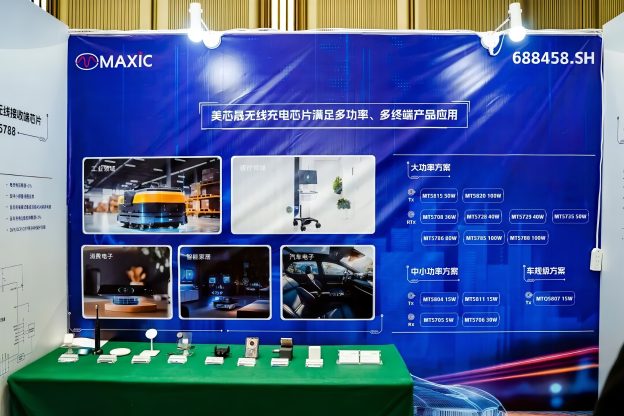
MAXIC: Price Adjustments Officially Initiated
MAXIC issued a price adjustment notice to its customers on January 30, 2026, stating that prices for certain products would be moderately increased effective immediately.
The company cited the broader market environment, noting that rising upstream raw material costs and tight industry capacity have made it difficult for original pricing to cover production and supply chain costs. These factors have also hindered the company’s ability to guarantee stable capacity and product delivery.
In its notice, MAXIC emphasized that the decision was made after comprehensive evaluation to ensure long-term supply chain stability and quality.
While specific models and adjustment magnitudes were not detailed, the company stressed that the move is a necessary response to the current industry climate.
MAXIC plans to continue optimizing production processes and operational efficiency to minimize the impact of these adjustments on its partners.
Although the company did not post the information on its official website, it confirmed via an investor interaction platform that price adjustments have been initiated based on market demand, material costs, and inventory levels.
MAXIC specializes in high-performance analog and mixed-signal chips, focusing on power management and signal chain products for consumer electronics and automotive sectors. The company expects significant growth in shipment volume and improved gross margins in 2026.
Kiwi Instrument: Upward Price Adjustments Announced
On January 30, Kiwi Instrument released a price adjustment notice stating that its product prices would increase effective immediately. Similar to other firms, specific models and price ranges were not disclosed.
The company pointed to the continuous rise in upstream raw material costs and ongoing capacity shortages as the primary drivers for the change. Kiwi Instrument noted that original prices could no longer meet supply requirements and that the hike is essential for securing production capacity and ensuring reliable product delivery.
The company focuses on the design and sale of high-performance analog and mixed-signal integrated circuits, including power management, motor drive control, and battery management products used in data centers and industrial control.
Injoinic: Price Hikes for Selected Products
On January 28, domestic chip manufacturer Injoinic issued a notice announcing price increases for a portion of its product lineup. The company explained that despite rising upstream costs, it had previously attempted to absorb the impact to keep prices stable.
However, to ensure long-term supply chain stability, it has decided to raise prices for certain models by a specific percentage.
Injoinic emphasized that its actions align with national efforts to enhance supply chain resilience and curb destructive internal competition, aiming instead for a collaborative and win-win ecosystem.
Founded in 2014, Injoinic specializes in mixed-signal ICs, focusing on power management, fast charging protocols, and wireless signal processing. Its products are widely used in smartphones, laptops, automotive electronics, and AI hardware systems.
(Photo credit: MAXIC)
Please note that this article cites information from Yicai.