[News] ASMPT Reportedly Considers Divesting SMT Unit to Double Down on Advanced Packaging
Global semiconductor packaging equipment leader ASMPT recently announced that it is evaluating strategic options for its Surface Mount Technology (SMT) business, including a potential sale, joint venture, spin-off, or public listing. According to EE Times China, divesting the SMT business would mark a decisive break from ASMPT’s industrial heritage rooted in Germany’s Siemens, enabling the company to fully refocus on the semiconductor sector with advanced packaging at its core.
Shifting Toward High-Margin Advanced Packaging
To explain the context behind ASMPT’s decision, the report notes that SMT mainly serves traditional PCB assembly, whereas semiconductor packaging equipment—especially advanced packaging tools for AI chips—offers significantly higher pricing power and margins. Once the SMT business is divested, ASMPT’s financials would undergo a notable structural shift. Based on extrapolations from its financial data, the report says overall revenue may contract in the short term, but margins are expected to rise structurally as higher-margin semiconductor businesses account for a larger share of the mix.
The move also reflects a push to concentrate resources. As the report points out, divesting SMT would free up capital, allowing ASMPT to focus its resources more fully on R&D in its core semiconductor packaging business.
In addition, the report notes that following an SMT divestment, ASMPT’s business structure would more closely align with key gaps in China’s chip industry. Although China hosts the world’s largest chip packaging and testing market, it remains heavily reliant on imports for high-end equipment, the report adds.
ASMPT’s Key Bonding Technologies and Market Position
As the report highlights, ASMPT holds two key capabilities—thermo-compression bonding (TCB) and hybrid bonding—which the industry widely regards as the second most important technologies after lithography. TCB, in particular, is a critical process for manufacturing HBM. SK hynix has placed large orders with ASMPT for TC bonding systems, while Samsung Electronics is said to be seeking adoption of ASMPT’s technology—highlighting ASMPT’s dominant position in the AI supply chain, the report notes.
The report adds that these strengths also align with areas where China’s semiconductor industry remains weak, making a deeper alignment between ASMPT and the Chinese market increasingly likely.
Read more
- [News] SK hynix Reportedly Places HBM4 TC Bonder Order With ASMPT Amid Hanmi–Hanwha Patent Clash
- [News] Hanmi Semiconductor Rumored to Halt TC Bonder Exports to China, Threatening Its HBM and AI Push
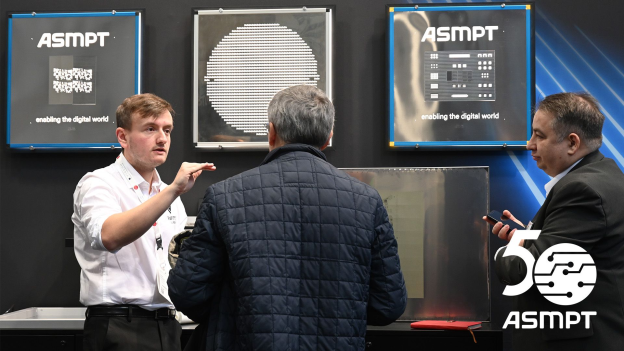
(Photo credit: ASMPT)
Please note that this article cites information from ASMPT and EE Times China.