[News] Trump Targets NVIDIA H200, AMD MI325X with 25% Tariff; U.S. Infrastructure Spared
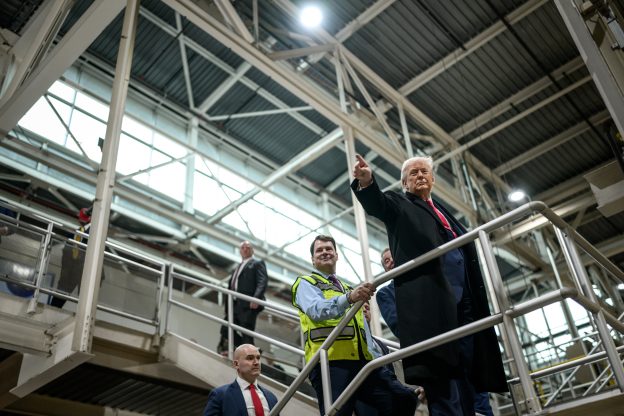
The White House has issued a new order on semiconductor tariffs. According to Reuters, U.S. President Donald Trump on Wednesday imposed a 25% tariff on select AI chips, including NVIDIA’s H200 AI processor and a comparable product from AMD, the MI325X.
Chips imported to support building up the U.S. technological supply chain would be exempt. As the report notes, the White House said in a fact sheet that the tariffs will be tightly targeted and will not cover chips or derivative products imported for U.S. data centers, startups, non-data center consumer uses, non-data center civilian industrial applications, or U.S. public sector deployments.
Reuters also reports that the Trump administration requires chips destined for China to be routed through the U.S. for testing by an independent third-party lab, rather than being shipped directly from Taiwan where they are manufactured. Once the chips enter the U.S., they become subject to the 25% tariff. The fact sheet also indicates Trump could introduce expanded tariffs on imported semiconductors and derivative products in the near future to boost U.S.-based manufacturing, Reuters adds.
The proclamation follows a nine-month probe conducted under Section 232 of the Trade Expansion Act of 1962, Reuters notes. The move is part of a broader push to encourage chipmakers to expand semiconductor production in the U.S. and reduce reliance on manufacturers in locations such as Taiwan. Bloomberg notes that though NVIDIA and AMD design many leading chips, most are manufactured overseas, primarily by TSMC.
Trump implemented the surcharge requirement one day after the Commerce Department’s Bureau of Industry and Security relaxed licensing requirements for H200 chip exports to China. According to Bloomberg, this tariff represents Trump’s condition for permitting NVIDIA’s sales to the Chinese market. However, several steps remain before NVIDIA can actually ship the chips, including securing export license approval from BIS—a process that typically spans weeks to months with no clear timeline for completion.
On Tuesday, the Trump administration cleared NVIDIA’s AI chip sales to China under newly defined restrictions. Reuters reports that shipments must undergo third-party testing to verify AI capabilities, with China-bound volumes capped at 50% of U.S. sales. NVIDIA must confirm that sufficient H200 supply remains available for the U.S. market, while Chinese customers are required to meet security requirements and commit to non-military use. In addition, according to the BIS press release, license applicants must demonstrate that shipments to China will not reduce the global semiconductor capacity available to U.S. customers.
Read more
- [News] NVIDIA Reportedly Tightens H200 Payment Terms Despite Possible Q1 Approval from China
- [News] Trump Approves H200 China Sales; U.S. Routing Reportedly Triggers 25% Revenue-Split Dispute
(Photo credit: The White House on X)
Please note that this article cites information from The White House, Reuters, Bloomberg, and U.S. Department of Commerce Bureau of Industry and Security.