[News] AR Boom Attracts New Entrants From Apparel, Home Appliances and Audio Industries
On June 30, South Korea’s apparel maker WONPUNG announced that it had signed a strategic memorandum of understanding (MoU) with Silicon Valley-based Sundiode to collaborate on next-generation hybrid bonding technologies for Micro LED displays.
Headquartered in Silicon Valley, Sundiode has developed a 3D vertically stacked Micro LED architecture that stacks RGB sub-pixels vertically, eliminating the individual pixel transfer process required by conventional lateral layouts. The approach enables ultra-high-resolution full-color displays within an extremely small pixel footprint.
Founded in 1972, WONPUNG is a publicly listed South Korean company primarily engaged in the manufacturing and sale of men’s apparel. Having long focused on traditional textile and garment production, the company views the partnership as an opportunity to diversify beyond its legacy business and establish a new growth engine in advanced technologies.
Under the agreement, WONPUNG will participate in the back-end hybrid bonding process for the commercialization of Sundiode’s next-generation Micro LED technology. The partners will initially target mass production of AR displays for defense applications before expanding into medical devices, AI-powered beauty equipment, precision sensors, and other markets.
Traditional Manufacturers Expand Into the AR Ecosystem
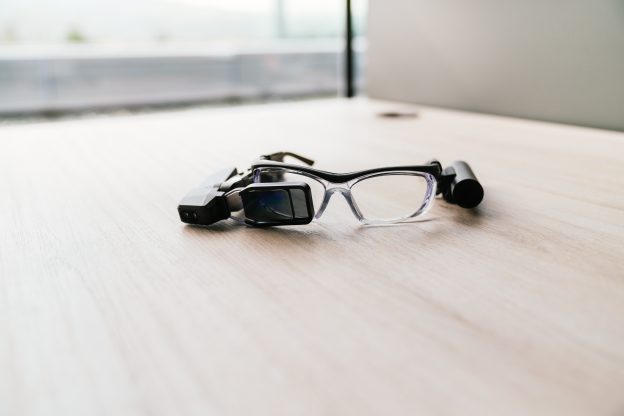
WONPUNG’s move from apparel manufacturing into hybrid bonding highlights the increasingly diverse range of companies entering the AR display and smart glasses supply chain. Similar cross-industry expansions are emerging worldwide, spanning small appliance manufacturing, audio products, electronics manufacturing, and gaming, reflecting a broader convergence between traditional manufacturing and emerging AR technologies.
Among home appliance manufacturers, Zhejiang-based BIYI Electric, best known as an OEM supplier of air fryers and ovens, recently disclosed that its newly established AR glasses production line at its Zhongyi Smart Base has completed delivery of its first pilot production orders. The company is manufacturing Zenith Pro, an outdoor HUD smart glasses product developed by Singapore-based smart hardware brand CYBERSIGHT for applications such as cycling and mountaineering.
BIYI’s AR assembly line, completed in October 2025, covers the entire production process, including optical module integration, component assembly, system calibration, and final inspection. The facility passed customer qualification audits in April this year, with pilot production yields reaching industry benchmarks.
To strengthen its optical capabilities, BIYI has also made a strategic investment in waveguide developer Raypai Optoelectronics, an optical supplier to leading AR brands like Rokid and INMO. The company has developed proprietary two-dimensional pupil expansion and molecular bonding technologies that enable lightweight, highly transparent waveguide lenses.
Meanwhile, audio ODM manufacturer Cosonic has entered the AR ecosystem through strategic equity investments. The company has invested in industrial AR glasses maker RealWear and consumer AR optical module supplier Lochn Optics. It also plans to acquire German premium audio brand beyerdynamic for approximately CNY 1 billion, aiming to strengthen its spatial audio and noise-cancellation technologies for AR glasses.
In the smart home and control systems sector, Real Design Intelligent announced in March 2026 that it would invest CNY 50 million in Goolton to expand into volumetric holography and AR glasses. Traditionally focused on intelligent controllers for home appliances, the investment represents a key step in extending its “1+3+N” strategy toward a broader smart hardware portfolio by leveraging its expertise in system integration.
On the content side, game publisher 37 Interactive Entertainment has also been actively expanding into AR hardware through investments. Its portfolio now includes consumer AR glasses developer Rayneo, lightweight AR glasses maker INMO, MR device company Ximmerse, UK waveguide specialist WaveOptics, and Chinese holographic waveguide developer Nika Optics.
Cross-Industry Expansion Opens New Growth Opportunities
The growing number of traditional companies entering the AR display and smart glasses market reflects several structural trends.
Most notably, slowing growth in their core businesses has prompted companies to seek new revenue drivers, while the increasing maturity of the AR supply chain has significantly lowered barriers to entry.
These cross-industry entrants also boast distinct competitive advantages. Contract manufacturers such as BIYI Electric and Cosonic possess well-established precision manufacturing capabilities, supply chain management expertise, and large-scale production know-how—critical strengths as AR glasses transition from prototype development to mass production.
Home appliance suppliers like Real Design Intelligent offer advantages in intelligent control systems, system integration, and distribution networks, which could facilitate the adoption of AR devices in consumer markets. Meanwhile, content companies such as 37 Interactive Entertainment are using strategic investments to complement hardware capabilities and build integrated ecosystems that combine content with AR devices.
(Photo credit: FREEPIK)