[News] Tsinghua Team Achieves Key Breakthrough in Novel Magnetic Memory
On March 16, at the Zhongguancun Forum event on “Progress in Beijing’s Basic Research and Technological Breakthroughs,” a research team led by Professor Song Cheng from the School of Materials Science and Engineering at Tsinghua University announced a major breakthrough in next-generation magnetic memory. The advance lays a critical scientific foundation for developing memory technologies that combine ultra-high density, ultra-fast read/write speeds, and low power consumption.
In recent years, the explosive growth of global data has strained conventional storage technologies, with memory and hard disk supplies facing recurring shortages and price volatility. Against this backdrop, memory solutions featuring ultra-high density, high speed, and low power consumption have become a core requirement for next-generation information technologies.
The team’s research focuses on altermagnets and chiral antiferromagnetic materials. The project has been selected as part of Beijing’s first batch of “non-consensus disruptive innovation” programs and is supported by the National Natural Science Foundation of China.
Magnetic storage technologies have long faced a fundamental trade-off. Ferromagnetic materials enable convenient electrical read/write operations but suffer from stray fields that limit storage density. Antiferromagnetic materials, by contrast, offer zero stray fields and terahertz-scale dynamics, yet are extremely challenging to control electrically. Chiral antiferromagnets, with their non-collinear spin configurations, are widely regarded as an ideal material system to overcome this bottleneck.
After years of research, the team has achieved a series of milestones. In 2022, they experimentally demonstrated the staggered spin-splitting torque effect in altermagnets for the first time—an achievement recognized internationally as an “original experiment” validating this material system. The findings enabled altermagnets to be named one of Science magazine’s Top 10 Breakthroughs of 2024.
In 2025, the team further identified crystal symmetry as the defining feature of altermagnets and became the first to realize fully electrical read/write operations. In 2026, related technologies have bridged key gaps from fundamental research to application, accelerating the path toward commercialization of next-generation magnetic memory.
According to the team, a homojunction design strategy enabled deterministic and complete switching of chiral antiferromagnetic order under zero magnetic field conditions. This significantly improves switching efficiency and unlocks the underlying mechanism governing efficient electrical switching in chiral antiferromagnets.
Currently, researchers are advancing the application of these materials in spintronic prototype devices, with potential future use in next-generation memory, sensors, terahertz communications, and artificial intelligence.
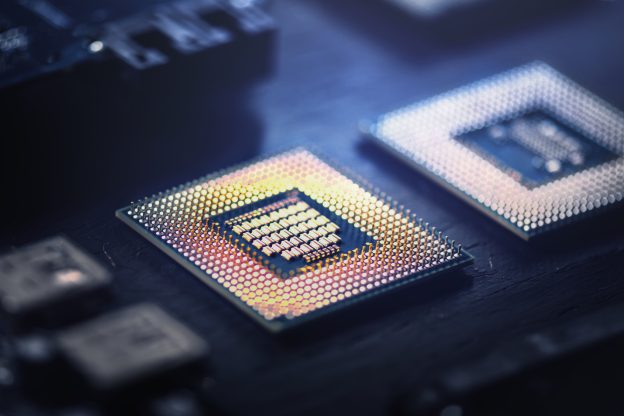
(Photo credit: FREEPIK)