Popular Keywords



About TrendForce News
TrendForce News operates independently from our research team, curating key semiconductor and tech updates to support timely, informed decisions.
[News] Xiaomi Doubles Down on Chips; Trademark Filing Reportedly Signals Potential Memory Entry
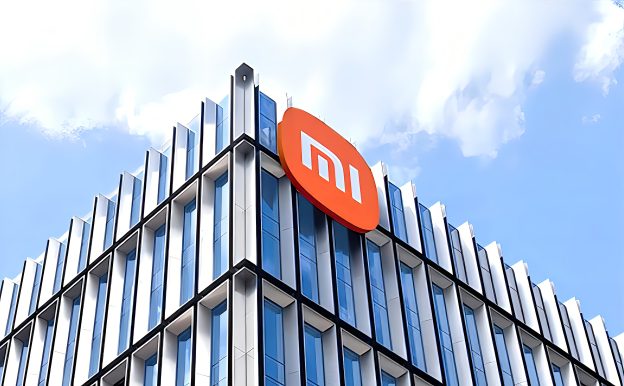
Xiaomi is stepping up its chip ambitions. According to South China Morning Post, the company is reinforcing its five-year investment plan focused on core technologies such as semiconductors, AI, and operating systems, as it positions itself as a deep-tech force in China’s self-reliance push.
Lei Jun, the company’s founder, chairman and CEO, said Xiaomi plans to integrate its in-house chip, proprietary operating system, and self-developed large AI model into a single device this year, according to the report. He also pledged to invest 200 billion yuan over the next five years in core technology research, aiming for breakthroughs in foundational chip tech and AI.
Xiaomi has committed significant resources to core technology development. As the report notes, citing China News Service, the company has invested more than 100 billion yuan (US$14.5 billion) in research over the past five years. The report further highlights that Xiaomi unveiled its self-developed XRING O1 integrated circuit (IC) last year, describing it as China’s first 3nm smartphone chip. The company stated that in certain benchmark tests, the chip outperformed Apple’s A18 Pro.
Notably, according to Mydrivers, citing sources, Xiaomi might be preparing to enter the memory sector. Recently, Xiaomi filed applications to register multiple “Xiaomi Intelligent Storage” trademarks, with international classifications spanning scientific instruments, telecommunications services, and website services. All applications are currently pending substantive examination. The potential move has attracted attention, as the global memory industry is currently experiencing a strong cyclical upswing.
Fellow Chinese Carmakers Intensify AI Integration Efforts
Meanwhile, beyond Xiaomi, other Chinese automakers are intensifying their AI integration strategies. In an internal letter to employees, Xpeng CEO He Xiaopeng said the company plans to seize opportunities in “physical AI” and aims to become the first company globally to mass-produce in three frontier AI fields: robotics, flying cars, and robotaxis, as South China Morning Post notes.
Xpeng plans to begin mass production of its next-generation Iron robot by the end of the year, targeting what it describes as the world’s first large-scale production of advanced humanoid robots. Meanwhile, The Paper reports that Li Auto is also accelerating its AI ambitions, with its Level 4 autonomous driving system potentially set for rollout as early as 2028.
Read more
- [News] China’s Xiaomi, OPPO Reportedly Cut 2026 Shipments Amid Memory Crunch, Huawei Less Affected
- [News] Xiaomi Reportedly Plans XRING O2 for 2026, Staying With TSMC’s 3nm Rather Than 2nm
(Photo credit: Xiaomi)
Please note that this article cites information from South China Morning Post, China News Service, Mydrivers, and The Paper.