Popular Keywords



About TrendForce News
TrendForce News operates independently from our research team, curating key semiconductor and tech updates to support timely, informed decisions.
[News] MediaTek Ventures into Micro LED Optical Communication
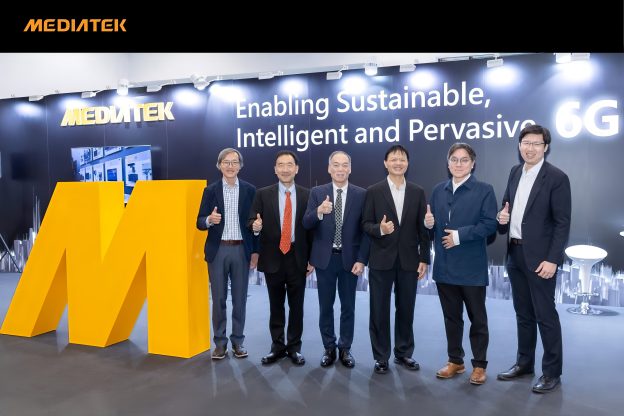
MediaTek, a leading IC design firm, has for the first time disclosed its strategic layout in the optical communication sector.
The company revealed that it has mastered self-developed Micro LED light source technology and utilized it to develop a new active optical cable (AOC) solution. MediaTek is expected to officially showcase this technology at the Optical Fiber Communication Conference (OFC) this April.
The solution developed by MediaTek primarily focuses on active optical cables. These products are designed for short-distance, high-speed interconnects, enabling highly efficient data transmission in critical scenarios such as between server racks and within data centers.
According to TrendForce, as data centers evolve toward large-scale clustering, high-speed interconnect technology has become the primary factor determining the performance ceiling and scalability of AI data centers.
Global shipments of optical transceiver modules rated at 800G or higher are expected to reach 24 million units in 2025 and are projected to hit nearly 63 million units by 2026, representing a growth rate of 2.6 times.
Headquartered in Taiwan, MediaTek is a leading global semiconductor company. As a fabless enterprise, its core business has long encompassed mobile communications, smartphones, smart TVs, and Internet of Things (IoT) chips.
This latest move into optical communication further expands its research and development scope into high-speed data interconnects and data center-related technologies.
LED manufacturers are also accelerating their entry into the optical communication business. As the scale of AI servers expands rapidly, the demand for high bandwidth and high-speed interconnects continues to grow.
The advantages of Micro LED, including low power consumption, high data transmission density, and temperature stability, are becoming increasingly prominent, attracting significant industry attention.
In the first half of 2025, a partnership between TSMC and Micro LED optical interconnect developer Avicena garnered industry focus. In August of the same year, a Microsoft team also announced technical progress in this field.
Coupled with MediaTek’s recent announcement, these events have significantly boosted the profile of Micro LED in non-display applications.
The accelerated implementation of Micro LED optical communication relies on the collaborative efforts of the entire LED industry chain.
Upstream LED chip manufacturers, such as Sanan Optoelectronics, BOE HC Semitek, HCEN, MTC, Ennostar, and Tyntek, are leveraging their existing Micro LED expertise to promote chips and devices specifically for optical communication, aiming for products with higher transmission rates.
Packaging companies like Jufei Optoelectronics, NationStar, and DSBJ are also advancing their optical communication operations.
Furthermore, in January this year, PlayNitride announced a collaboration with Brillink, a member of the Alchip ecosystem, to jointly create a next-generation AI optical interconnect platform.
This partnership officially extends Micro LED technology from traditional displays to high-performance computing architectures, seeking to replace current mainstream active electrical cables (AEC) and provide critical transmission technology support for next-generation computing infrastructure.
According to TrendForce’s 2025 Micro LED Display and Non-Display Application Market Analysis, Micro LED is expected to benefit from the industrial scale of the display sector, leading to rapid cost reductions in the coming years.
As the trend of falling costs aligns with the high bandwidth requirements driven by the growth of AI computing power, the technical deployment of Micro LED in the optical communication field will further accelerate.
The entry of companies like MediaTek, TSMC, and Microsoft, along with the accelerated layout of manufacturers across the industry chain, not only drives the diversified development of Micro LED in non-display applications but will also reciprocally promote mass production and industrial maturity in the display sector.
(Photo credit: MediaTek on LinkedIn)