Popular Keywords



About TrendForce News
TrendForce News operates independently from our research team, curating key semiconductor and tech updates to support timely, informed decisions.
[News] Nittobo Reportedly Plans 2028 Next-Gen T-Glass; Customers May Include NVIDIA, Apple, and Others
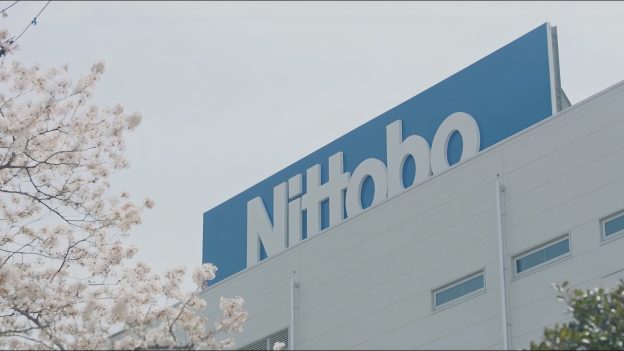
Japan’s Nittobo is preparing to unveil a next-generation version of its T-glass aimed at AI chip. According to Nikkei, the company plans to introduce an upgraded edition of its high-demand glass fiber cloth as early as 2028, offering improved resistance to heat-induced warping for AI chips. As the report highlights, Nittobo controls roughly 90% of the global T-glass market. The next-generation product is expected to improve thermal expansion coefficient by about 30% to 2.0 parts per million from the current 2.8 ppm.
As noted by Economic Daily News, T-glass is a high-end glass fiber cloth with a low coefficient of thermal expansion (CTE). It is used in IC substrates such as ABF and in advanced packaging substrates to improve dimensional stability, reduce warpage, and support large-scale AI packages, including platforms such as CoWoS and SoIC.
The material counts several major technology firms among its customers. Nikkei notes that U.S. tech giants such as NVIDIA, Google, and Amazon are competing to secure supplies of Nittobo’s glass cloth.
Currently, Nittobo is refining the new cloth based on sample evaluations by copper-clad laminate makers that supply circuit board substrates. At the same time, the company is developing a next-generation low-dielectric glass cloth for applications such as AI server motherboards, targeting rollout and mass production as early as next year, Nikkei notes.
Rising demand is driving capacity expansion. According to Nikkei, Nittobo decided in 2024 to build glass-melting furnace facilities in Taiwan to boost output of the glass fiber yarn used in its cloth products. Separately, the company said last year it would invest ¥15 billion ($96 million) to expand capacity by up to threefold at its Fukushima production base, with new facilities slated to come online in 2027.
From Glass to Quartz: Japan’s Materials Edge in Chip Substrates
Beyond Nittobo, Nikkei notes that Japan’s Unitika supplies ultrathin, low thermal expansion glass cloth used in smartphone chip substrates. Nikkei adds that manufacturers in China and Taiwan are also beginning to place greater emphasis on glass-based materials.
Companies such as Asahi Kasei supply low-dielectric materials, which are essential components in printed circuit boards that enable high-speed, high-volume data transmission and are used in applications including data center server switches. As Nikkei highlights, Asahi Kasei and Nittobo are regarded as the two leading players in this segment.
More specifically, the report says that Asahi Kasei is developing a quartz-based cloth that enables faster data transmission than conventional glass. Although quartz’s hardness makes it more difficult to process, the company aims to begin mass production as early as this year. It is targeting a doubling of sales in this segment, including both glass and quartz cloth, between 2024 and 2030. Nikkei adds that Shin-Etsu Chemical has also begun engaging customers on the adoption of quartz cloth and is preparing for large-scale production of products expected to see strong demand.
Read more
- [News] What Is Glass Fiber Fabric and Why Is T-Glass Critical for AI Servers? A Deep Dive
- [News] Nittobo Expands Glass-Fiber Output with Nan Ya; Nan Ya to Handle 20% by 2027 Amid AI Surge
(Photo credit: Nittobo)
Please note that this article cites information from Nikkei and Economic Daily News.