Popular Keywords



About TrendForce News
TrendForce News operates independently from our research team, curating key semiconductor and tech updates to support timely, informed decisions.
[News] ASUS’s Reported 15-20% Price Hike Triggers Domino Effect as Retailers Raise Rivals’ Prices Jan. 5
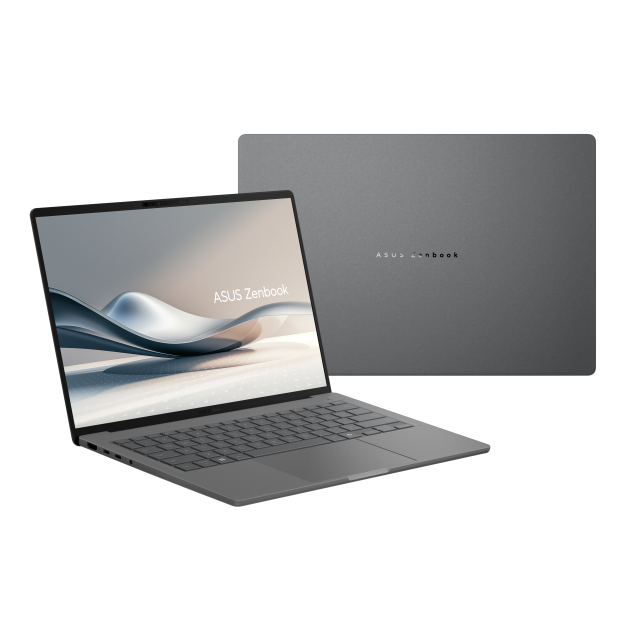
ASUS has sent shockwaves through Taiwan’s notebook market, announcing a fresh round of price hikes effective today (Jan. 5). According to Mirror Daily, the company has told resellers that prices for mainstream notebook models will rise by NT$3,000 to NT$5,000, while gaming laptops could see increases of NT$8,000–NT$10,000.
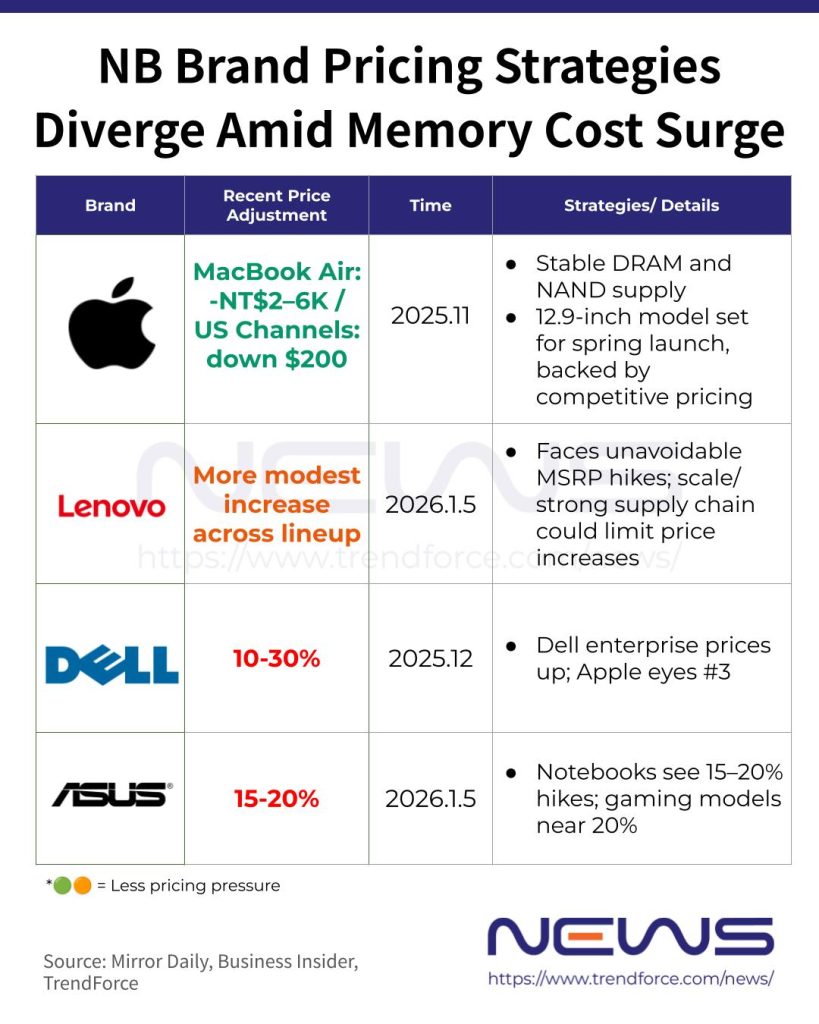
With ASUS entry-level notebooks currently priced around NT$14,000 and mid- to high-end office models around NT$30,000, the increases translate into roughly 15–20%, the report suggests, adding that for gaming machines, which typically start above NT$35,000 and can easily exceed NT$50,000, the implied price hike is closer to 20%.
ASUS had explained in the notice that structural shifts in the global supply chain are driving unprecedented cost pressure on key components — especially memory (DRAM) and storage such as NAND and SSDs.
Notably, its price hike has sent shockwaves through the market. Mirror Daily reports that Mildef Crete, a leading retailer at Taiwan’s Guanghua Digital Plaza, quickly followed, raising prices on Acer, HP, Dell, MSI, and Gigabyte by roughly NT$6,000 per unit, or 15% to 20%.
Sanjing 3C, which operates six stores across Syntrend Creative Park, Mitsui and Guanghua, confirmed to Mirror Media that starting Monday, in addition to ASUS, notebook prices for HP, MSI, and Gigabyte are also up, with average increases still above 15%.
Next Wave Brewing?
Notably, ASUS isn’t alone in raising notebook prices. Liberty Times and Central News Agency report that Lenovo will hike its entire lineup from January 5, 2026 — a move reportedly even broader than ASUS’s.
Mirror Daily cites senior notebook executives saying this could be just the first wave. Soaring memory and SSD costs, along with rising component prices, including aluminum, gold and tin, may push overall notebook prices even higher, the report notes, adding that suppliers of power modules and PCBs are expected to lift prices, suspend routine quarterly discounts, or shrink them — signaling a likely second round of hikes ahead.
Apple Bucks the Trend
Interestingly, Mirror Daily notes that as notebook prices surge across the industry, Apple has taken the opposite path. The report points out that thanks to its long-term contracts with NAND flash suppliers and the three major DRAM makers, Apple’s memory and SSD supply remained relatively secure and pricing more stable than that of Windows PC brands — allowing the MacBook Air to see a price cut instead of a hike. Its best-selling MacBook Air, as per the report, was already cut by NT$2,000 in Taiwan in November 2025, while U.S. retailers went further, slashing prices by about US$200 — more than NT$6,000.
According to TrendForce, amid a tough market environment, Apple aims to introduce a 12.9-inch model in spring 2026 targeting the entry-to-mid-range segment. Although the timing isn’t perfect, ongoing supply chain efficiencies, scale benefits, and competitive pricing should help the product attract buyers, boosting market penetration and sustained shipment performance.
Read more
- [News] ASUS to Raise Prices on Selected PC Lines from Jan. 5 Amid Memory Cost Surge, Following Dell
- [News] Dell Reportedly Plans 10–30% Hikes on Commercial PCs From Dec. 17 as Memory Prices Surge
- [Exclusive] Memory Crunch Hits PCs: Dell Hikes Prices 15-20% Mid-December, Lenovo from January 2026
(Photo credit: ASUS)
Please note that this article cites information from Mirror Daily, Liberty Times and Central News Agency.