Popular Keywords



About TrendForce News
TrendForce News operates independently from our research team, curating key semiconductor and tech updates to support timely, informed decisions.
[News] Automakers Race Into the Emerging AI Glasses Arena
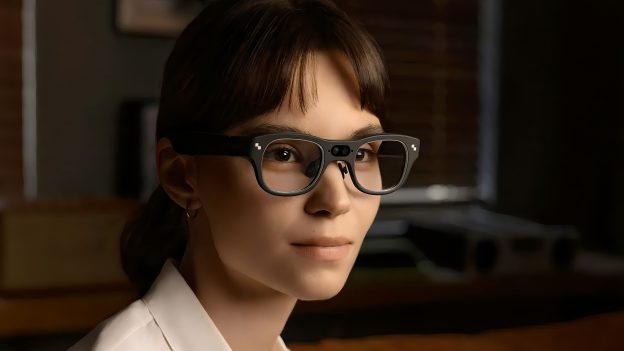
In 2025, as the AI glasses market continues to expand by leaps and bounds, competition becomes intensified among established players such as RayNeo and Rokid, internet giants including Meta and Baidu, and smartphone makers led by Huawei. Notably, automakers such as Li Auto and Geely have also involved themselves in this rivalry. This article focuses on how carmakers position themselves, tracing the evolution of smart glasses within the automotive sector.
Retrospect: From Concept Experiments to B2B Tools, and Toward a Standard In-Car Feature
Automakers have explored smart glasses for more than a decade, with their role shifting alongside technological progress:
Early exploration (2015–2018): In 2015, BMW unveiled the MINI AR concept glasses, aiming to eliminate A-pillar blind spots through a “see-through” display. However, technological limitations prevented mass production. Subsequently, Porsche and Mercedes-Benz repositioned smart glasses as B2B tools, mainly for after-sales maintenance and employee training.
Entertainment-oriented phase (2021–2022): As smart cockpits evolved into a “third living space,” AR glasses became an extension of the in-car cinema experience.
NIO: Partnered with Xreal in 2021 to launch NIO Air AR Glasses as a factory option, which was capable of projecting a 130-inch virtual screen inside the vehicle.
Li Auto: Introduced RayNeo Air glasses in models such as the L9, delivering a 140-inch high-definition viewing experience when paired with the in-car entertainment system.
Connectivity and specialization (2023–2024): Geely acquired Meizu to form Star MYVU, launching multiple MYVU-series glasses to enable deep integration with in-car systems. BMW, meanwhile, rolled out ConnectedRide smart riding glasses, projecting navigation and speed data directly into the rider’s field of view, addressing pain points in two-wheel mobility.
The AI acceleration phase (2025): Large AI models picks up pace. Xiaomi and Geely successively unveiled AI cockpit technologies, while Li Auto officially launched its first AI glasses product, Livis in December.
Technology Choices: OLEDoS Driven by Entertainment Demand
Amid the early-2020s “mobile cinema” wave, automakers prioritized technologies optimized for viewing experiences.
OLEDoS (silicon-based OLED) emerged as the preferred choice for NIO, Li Auto, and BMW (via Xreal solutions) due to its high resolution, high refresh rates, and relatively mature cost control. In the controlled lighting environment of a vehicle cabin, its brightness limitations were less apparent, while its image quality effectively met user demand for watching movies and sports in-car.
However, as models like the Aito M9 featured up to 10 physical displays, the necessity of smart glasses as an “extra entertainment screen” diminished, prompting the industry to seek new growth drivers.
The AI Pivot: Lightweight Design and Independent Perception
From the second half of 2024 onward, influenced by the success of Meta Ray-Ban glasses and the trend of large models entering vehicles, smart glasses have evolved into “AI assistants” with independent computing capabilities. Current products largely fall into two categories:
AI glasses without displays (subtraction approach): By removing optical modules, these products emphasize lightweight design and voice interaction.
Xiaomi: Focuses on voice interaction and integration across human–vehicle–home ecosystems, with a starting price of CNY 1,999.
Li Auto Livis: Designed in a sunglasses form factor without a display. Deeply integrated with the “Li Auto Assistant” large model, it supports Face ID and voice-based vehicle control (such as air conditioning and tailgate operation). Priced at CNY 1,999, this aggressive strategy significantly boosts market penetration.
AR glasses with displays (addition approach): These continue to emphasize visual interaction, exploring more complex scenarios such as assisted driving.
Looking Ahead: AI Glasses as a Transitional Stage, AR as the Future
Despite the current popularity of “audio-first, visual-light” AI glasses, industry consensus views this as a transitional phase toward broader adoption.
The necessity of visual interaction: In driving scenarios, voice-only interaction cannot meet spatial perception needs. “See-through” AR navigation remains essential.
Technology iteration—LEDoS steps into the spotlight: To cope with strong in-cabin lighting, LEDoS (silicon-based Micro LED), offering higher brightness and contrast, is beginning to replace OLEDoS.
Geely: Invested early in LEDoS manufacturer JBD, with its DreamSmart products now fully adopting LEDoS technology.
GAC and Rokid: Jointly tested a new-generation AI smart glasses solution in late 2024, using a JBD monochrome light engine to address visibility and battery-life challenges under strong light.
According to TrendForce, as full-color LEDoS technology matures, the penetration rate of AR glasses equipped with LEDoS is expected to reach 65% by 2030. Looking ahead, smart glasses will no longer serve merely as accessories to in-car systems, but will become core terminals deeply integrated into driving assistance and spatial interaction.
(Photo credit: JBD)