Popular Keywords



About TrendForce News
TrendForce News operates independently from our research team, curating key semiconductor and tech updates to support timely, informed decisions.
[News] China’s A-Share Chip Firms Reportedly Pour ¥68B into R&D in Q1–Q3 2025 Amid Domestic Push
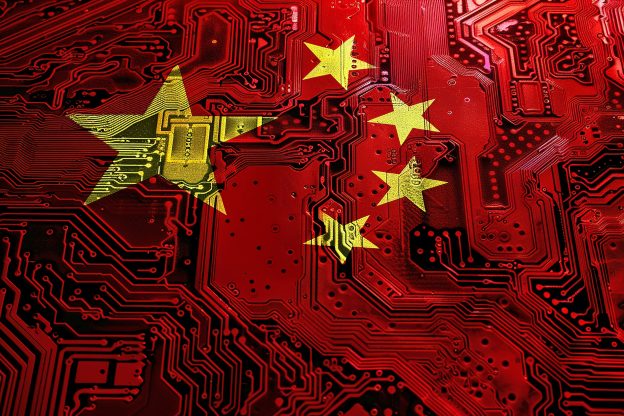
As U.S. export controls tighten, China’s semiconductor industry is doubling down on R&D to close the technology gap. According to ijiwei, in the first three quarters of 2025, 228 A-share listed semiconductor companies in China invested a total of 68.02 billion yuan in R&D, representing an overall R&D-to-revenue ratio of 10.45%.
R&D Spending Surges Among China’s Chip Industry Leaders
Among these companies, the report notes that industry leaders have demonstrated strong financial strength and long-term strategic vision. China’s top equipment maker Naura ranked first with R&D spending of 3.285 billion yuan, followed by Hygon, China’s major CPU maker, with 2.586 billion yuan.
The report also indicates that companies such as AMEC, one of China’s leading chip equipment makers (1.794 billion yuan), Wingtech, parent company of auto chipmaker Nexperia (1.598 billion yuan), and JCET, China’s leading chip packaging firm (1.536 billion yuan), have maintained high-intensity investments exceeding 1 billion yuan. Furthermore, more than 30 companies recorded R&D investments exceeding 500 million yuan, including China’s AI chipmaker Cambricon and China’s EDA giant Empyrean.
R&D Investment Growth Accelerates Across China’s Chip Industry
R&D spending by China’s chip companies is also rising at a sharp pace, the report notes. Beijing YanDong MicroElectronic (YDME), a company primarily engaged in chip design, wafer fabrication, and packaging and testing, led with a year-on-year increase of 161.85%, driven by its technological investments in specialty process chips.
AMEC (96.30%) and several other firms also recorded R&D growth rates exceeding 50%. Beyond these frontrunners, 22 companies reported R&D investment growth between 30% and 50%, including China’s leading chip equipment makers Naura and Hwatsing, as the report indicates.
Companies in Niche Fields Accelerate R&D Push
Beyond total spending, the R&D-to-revenue ratio—R&D expenditure as a share of revenue—is another key indicator of innovation strength. As the report states, several small and medium-sized enterprises stood out, with Loongson Technology leading at 91.83%, underscoring its commitment to advancing China’s core CPU technologies. Major EDA players Empyrean (69.20%) and Primarius (62.04%) also maintained exceptionally high R&D-to-revenue ratio, as ijiwei notes.
Fueled by strong R&D investment, tech companies across the semiconductor value chain are showing solid innovation momentum, as ijiwei indicates. In the equipment sector, beyond Naura and AMEC, firms such as ACM Research and Piotech continue to make strides. In chip design, OmniVision Group, GigaDevice, and SG Micro are making steady progress. In materials, Crystal Clear Electronic Material and Shanghai Sinyang are achieving breakthroughs in key technologies, while in EDA, companies such as Empyrean and Primarius are advancing rapidly.
Read more
- [News] Chinese Chip Tool Maker AMEC Thin-Film Revenue Soars Nearly 1,300% YoY — What’s Behind It?
- [Insights] China’s Chip Equipment Sector Lands ¥13B in Jan–Oct 2025: 7 Deals That Defined the Surge
(Photo credit: FREEPIK)
Please note that this article cites information from ijiwei.