Popular Keywords



About TrendForce News
TrendForce News operates independently from our research team, curating key semiconductor and tech updates to support timely, informed decisions.
[News] Huawei’s Bold Return: Mate XTs Debuts Kirin 9020 After Four Years of Chip Silence
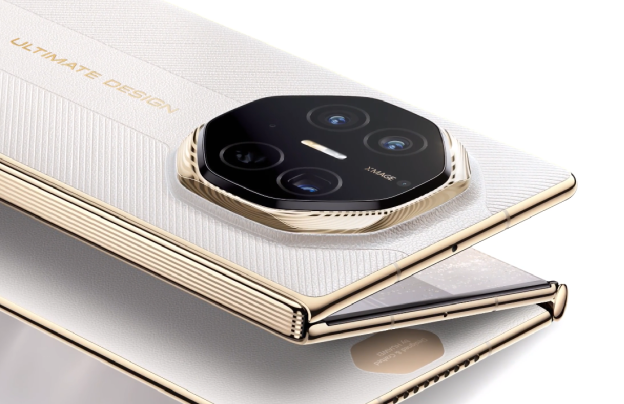
As Huawei debuted the second-generation trifold smartphone, the Mate XTs, on September 4, the spotlight turned to the company’s bold return to high-end silicon. According to Huawei Central, mydrivers and The Paper, Huawei Consumer Business Group Chairman Richard Yu officially confirmed at the launch event that the new foldable is powered by the Kirin 9020—marking the first time since 2021 that a Kirin processor has been openly named and positioned as a key product highlight.
The reports notes that the last appearance of a Kirin chipset at a Huawei launch event dates back to 2021. As per Huawei Central, though the company did not disclose technical details at the event, reports suggest the new chip could be produced by China’s SMIC using a 7nm process.
Notably, GSMArena suggests that the Kirin 9020 chipset doesn’t just power the Mate XTs—it also drives other Huawei flagships like the Pura 80 Pro+ and 80 Ultra. Huawei claims the new chip delivers a 36% performance improvement over its predecessor, the report adds.
The Implication of Kirin 9020
On the other hand, Tom’s Hardware previous pointed out that the Kirin 9020 demonstrates Huawei’s success in integrating a 5G modem into a high-end, domestically-produced system-on-chip (SoC) despite U.S. sanctions. While featuring a 12-core CPU setup, the Kirin 9020 also includes the Balong 6000 5G modem—the first time Huawei has embedded 5G directly into a smartphone SoC, the report noted.
The report further emphasized that integrating a 5G modem into an SoC is a significant engineering achievement—one that even Apple has yet to accomplish. For SMIC, this milestone is important as well, as 5G basebands are among the most complex chips to manufacture, requiring dense logic, high-speed DSPs, and sensitive analog/RF components, according to Tom’s Hardware.
Details on Mate XTs and Huawei’s Broader Smartphone Strategy
For Mate XTs itself, The Paper notes that Huawei remains the only company worldwide to have successfully mass-produced a tri-fold smartphone with its Mate XTs model. However, Samsung is reportedly planning to launch its first tri-fold phone in the second half of this year, potentially becoming the world’s second manufacturer to mass-produce such a device.
As CNBC points out, unlike typical foldables that use a single hinge, the Mate XTs employs a trifold design with two hinges, allowing the phone to fold in three sections and transform into a tablet-like display. Huawei pioneered this concept last year with the Mate XT, the world’s first mass-produced tri-fold smartphone.
The Mate XTs starts at 17,999 yuan (around $2,520) and goes up to 21,999 yuan for the highest storage configuration.
On the other hand, there are also more details surfaced on Huawei’s next-gen flagship smartphone, the Mate 80, which is expected to launch in the fourth quarter. According to Wccftech and Chinese outlet IC smart, the device is rumored to come with the Kirin 9030 chip, which is likely to stick with the same 7nm process used in its predecessor, the Kirin 9020.
Read more
- [News] Huawei’s 5nm Kunpeng 930 Leak Raises Big Question: TSMC or SMIC Behind it?
- [News] China Reportedly to Triple AI Chip Output Next Year With Fabs Serving Huawei, Cutting NVIDIA Reliance
(Photo credit: Huawei)
Please note that this article cites information from Huawei Central, mydrivers, The Paper, GSMArena, Tom’s Hardware, CNBC, Wccftech and IC smart.