Popular Keywords



About TrendForce News
TrendForce News operates independently from our research team, curating key semiconductor and tech updates to support timely, informed decisions.
[News] Is Cambricon the Next NVIDIA or Unsustainable Growth Story? Three Key Risks Behind the Epic Rally
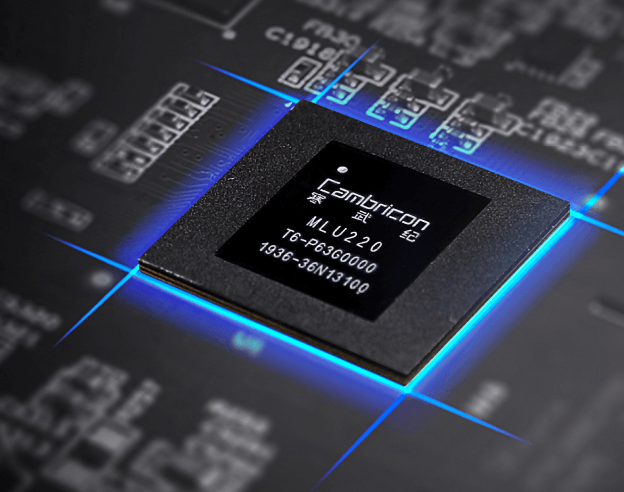
China’s AI chip rising star Cambricon has become the market sensation these days, with its market cap briefly hitting RMB 580 billion, surpassing SMIC and even Taiwan’s MediaTek, reports Business Today. Dubbed China’s NVIDIA, it trades at an eye-popping trailing 12-month P/E above 4,000—compared with under 60 for NVIDIA—reflecting growing confidence that China is building a homegrown AI ecosystem, according to the South China Morning Post.
What’s driving Cambricon’s stock surge, and what hurdles lie ahead? Here’s a quick look at the company’s rise, its founders, products, and key risks.
Earnings Boom Gives Cambricon Stock a Lift
As Sina notes, Cambricon’s stock surge is partly driven by its explosive growth. Q1 2025 revenue already reached RMB 1.11 billion, nearly matching the RMB 1.17 billion recorded for all of 2024, and the company’s H1 2025 revenue soared to RMB 28.81 billion, a 43-fold year-on-year increase, the report adds.
Profitability has also turned sharply positive. According to Sina, Cambricon reported a net profit of RMB 1.038 billion in H1 2025, compared with a RMB 530 million loss in H1 2024. After swinging to profit in Q4 2024, the company has now posted three consecutive profitable quarters, Sina notes.
Looking ahead, Cambricon’s next flagship, Siyuan 690, is expected to rival NVIDIA’s H100 in performance, according to South China Morning Post. Meanwhile, Business Today notes that its 2023-launched Siyuan 590 delivers roughly 80% of NVIDIA’s A100 performance, and is built using China’s domestic 7nm process.
Founded in 2016 by brothers Chen Yunji and Chen Tianshi, both still in their early 40s now, Cambricon has been listed on Shanghai’s STAR Market since 2020, reports South China Morning Post. Hailing from Nanchang, Jiangxi, the brothers trained in the Chinese Academy of Sciences’ elite “genius youth class” before joining its Institute of Computing Technology—one focusing on semiconductors, the other on AI.
Today, the younger Chen serves as Cambricon’s chairman and largest individual shareholder, owning 28.6% of the company, which has made him one of China’s richest people with a personal fortune of US$20 billion, South China Morning Post adds.
Key Risks: Clients, Geopolitics, Competition
However, Sina also flags risks behind Cambricon’s strong earnings: 99.6% of its H1 2025 revenue comes from cloud AI chips, which are almost entirely devoted to large model training and inference, supporting mainstream domestic models like DeepSeek and Qwen.
In line with Sina’s view, Business Today points out that Cambricon’s top five clients account for over 94% of sales, with the largest client contributing nearly 80%, which is likely Alibaba or its cloud division. The structure suggests that if even one key client reduces budgets or delays projects, Cambricon could face a significant revenue gap.
Geopolitical tensions pose another major risk. Added to Washington’s trade blacklist in December 2022, Cambricon has been cut off from key U.S. technologies and faces restrictions on using TSMC’s foundry services. Sina notes that to mitigate this, Cambricon has chosen to stockpile inventory and lock production capacity. While this ensures short-term delivery, it also raises capital tie-up, inventory risk, and potential overstock pressure over the medium to long term, the report adds.
In addition, Business Today highlights China’s fiercely competitive chip market, where rivals often match or exceed international standards. Huawei’s Ascend 910B is already in mass production, slightly outperforming Cambricon with a more mature ecosystem, while Hygon Information is developing chips aimed at rivaling NVIDIA, as per the report.
Cambricon’s future is deeply tied to China’s AI ecosystem. Its meteoric growth represents a high-stakes gamble on the backbone computing power of domestic large models, betting on whether China’s AI industry can truly stand on its own over the next two to three years.
Read more
- [News] AI Chip Firm Cambricon Poised as China’s Top Stock of 2024 with Nearly 400% Surge, Surpassing NVIDIA
- [News] China Reportedly Advises Local Companies to Avoid NVIDIA’s H20, Benefiting Huawei and Cambricon
(Photo credit: Cambricon)
Please note that this article cites information from Business Today, South China Morning Post, and Sina.