[News] Samsung Foundry Loss Reportedly Seen Shrinking 42% YoY in 2026 as HBM4 Base-Die 4nm Demand Rises
Samsung Electronics’ growing HBM4 business is helping support its foundry operations as the company works to narrow losses. According to Digital Today, the foundry business is expected to reduce its losses in the third quarter, supported by HBM volumes from Samsung’s memory division. Because HBM4 base dies are manufactured using the company’s foundry logic process, rising HBM4 sales also generate foundry revenue.
The connection stems from HBM’s architecture. HBM stacks multiple DRAM dies, while the base die at the bottom controls signals across the stack. Samsung said it began volume shipments of HBM4 in February, combining 1c DRAM with a base die manufactured on a 4nm process, and supplied HBM4E samples to customers in May.
As HBM4 takes a larger share of Samsung’s HBM sales, its contribution to foundry revenue is also increasing, as the report highlights. Samsung expects HBM4 revenue to more than triple QoQ in 3Q and account for well over 60% of total HBM revenue in the second half, pointing to further growth in base-die volumes.
The higher volumes are also expected to improve earnings. According to the report, citing Kiwoom Securities, the combined operating loss of Samsung’s Foundry and System LSI businesses is projected to narrow 41.8% YoY, from KRW 6.74 trillion last year to KRW 3.92 trillion this year. The quarterly loss, which widened in 2Q, is expected to shrink to KRW 777 billion in 3Q.
The growing HBM4 volumes may also be giving Samsung greater pricing flexibility. According to iNews24, strong demand for HBM4 base dies and advanced-node orders has reduced the need for Samsung Foundry to accept lower-priced contracts simply to raise utilization. The report notes that Samsung raised prices for new 4nm orders in July, while some advanced-node prices reportedly increased by 10–15%.
External Orders Key to Further Improvement
After exceeding KRW 2 trillion per quarter in the first half of last year, Samsung’s foundry losses have ranged from KRW 700 billion to KRW 1.2 trillion per quarter this year. The fluctuations reflect the limits of relying on memory-related demand alone to fill its foundry lines. Digital Today notes that internal memory-related orders alone have not been enough to fully utilize Samsung’s foundry capacity.
Samsung is therefore expanding turnkey contracts with external customers. According to Digital Today, Samsung signed an MOU with Broadcom in July to pursue more than US$200 billion in cooperation through 2030. The agreement includes supplying HBM4 and HBM4E for Broadcom-designed custom AI accelerators, alongside 2nm-and-below foundry processes and advanced packaging for key products.
Further improvement will ultimately depend on advanced-node orders from external customers. Samsung said its foundry business secured 2nm projects from a major cloud service provider (CSP) and AI and HPC customers in 2Q, with customers already beginning product design. The Information also notes that Anthropic reportedly could tap Samsung Foundry to manufacture AI chips.
Read more
- [News] Samsung Sees HBM Taking Nearly 30% of Industry DRAM Capacity in 2027, Up From 20% Currently
- [News] Samsung Taylor Fab Reportedly Fully Booked for 2nm by Tesla, Broadcom, Arm; Fab 2 Preparations Accelerate
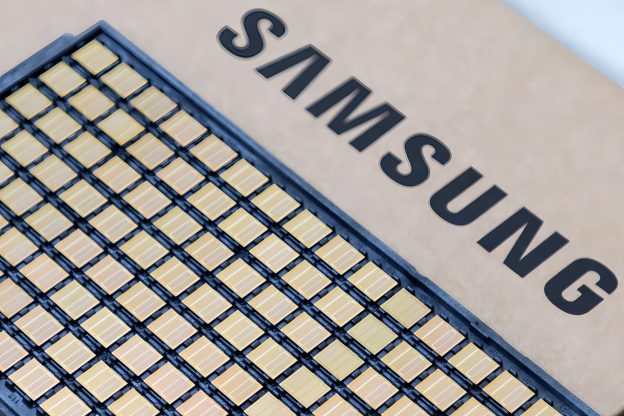
(Photo credit: Samsung)