[News] Korea’s HBM-Related Exports to Malaysia Soar 5.7-Fold in One Year as AI Packaging Demand Rises
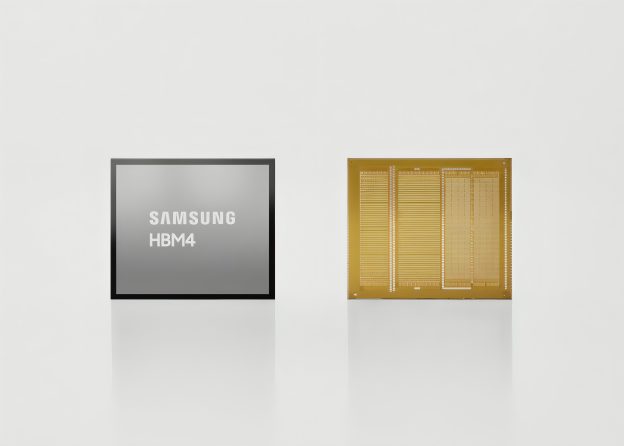
The AI packaging boom is reshaping South Korea’s HBM export flows, with Malaysia taking on a growing role. According to Chosun Biz, South Korea’s HBM-related exports to Malaysia have surged 5.7-fold in just one year. Annual exports stood at only around KRW 130 billion four years ago, but have now grown to roughly half the level of Taiwan, a major advanced packaging hub.
As noted by the report, Korea Customs Service data show that exports to Malaysia of multichip integrated circuits under HS code 8542.32.3000, a category that includes HBM, reached US$1.62 billion in August alone. Export volume also climbed from 1.4 tons to 3.8 tons YoY, an increase of roughly 2.7 times.
Malaysia Expands Its Role in Advanced Packaging
Malaysia’s growing role in the HBM supply chain builds on its long-established semiconductor back-end industry. As noted by the report, according to the Malaysian Investment Development Authority (MIDA), the country accounts for around 13% of global semiconductor assembly, testing, and packaging activity and has recently been expanding into advanced packaging for AI and high-performance computing (HPC).
Malaysia’s expansion comes as Taiwan faces growing advanced packaging capacity constraints. Chosun Biz notes that surging AI accelerator demand has strained capacity at Taiwan’s advanced packaging ecosystem, centered on TSMC, creating opportunities for Malaysia to take on additional back-end work.
An Economic Daily News report from August also pointed to this trend. With TSMC’s CoWoS orders reportedly fully booked, some back-end advanced packaging work is said to be supported by Intel’s Malaysia facility. Intel has also been expanding its advanced packaging footprint in Malaysia. As noted by TechPowerUp, the company entered the final phase of its US$7 billion Project Pelican late last year, with the facility supporting die sort and die preparation for its EMIB and Foveros packaging flows.
Still, an industry official cited by Chosun Biz said Intel’s packaging volumes remain relatively small. Rather than Malaysia taking orders away from TSMC, the official said the broader trend reflects the country’s emergence as an alternative supply-chain hub as surging AI accelerator demand drives greater advanced packaging requirements.
Malaysia Builds Up AI Packaging Capacity
Against this backdrop, global chipmakers are also expanding their advanced packaging presence in Malaysia. According to Chosun Biz, ASE, the world’s largest provider of semiconductor packaging and testing services, opened its fifth plant in Penang last year to strengthen its advanced packaging capabilities. Meanwhile, TF-AMD Microelectronics, a joint venture between AMD and Tongfu Microelectronics, plans to add bumping and advanced packaging services at its Batu Kawan site by the end of 2026.
Malaysia is also investing in domestic advanced packaging technology. According to Chosun Biz, the Malaysia Advanced Packaging Consortium (MAPC), which includes five local companies, is working on test chips and advanced packaging prototypes for HBM4 with government support. The consortium aims to establish test facilities by the end of 2026 and validate prototype manufacturing processes in 2027. Malaysia aims to capture 7% of the global advanced packaging market by 2035, the report adds.
Read more
- [News] SK hynix Reportedly Explores Leasing Intel’s Ohio Fab, Could Produce Memory in U.S. for First Time
- [News] NAND Leaders Bet on Taiwan’s DRAM Maker: Why Kioxia, SanDisk, SK hynix Back Nanya Tech’s $2.5B Deal?
(Photo credit: Samsung)