October NAND Flash wafer prices soared significantly. Robust AI/enterprise SSD demand and manufacturers' supply prioritization caused severe shortages and 'prices without goods.' Further hikes are anticipated.
October SLC/MLC NAND Flash contract prices expanded gains, driven by manufacturer supply contraction and robust niche demand. Market tightness intensified, with prices expected to sustain their upward trend.
HDD shortages and surging AI demand are fueling enterprise SSD scarcity. Suppliers are aggressively raising 4Q25 contract prices over twenty percent, with increases continuing as CSPs prioritize supply.
Clouds shift to enterprise SSDs amid HDD delays, tightening supply and lifting prices. AI and commercial PCs refresh keep demand firm.
Supply bottlenecks and migration curb NAND output; enterprise SSD crowds out eMMC/UFS, lifting prices into next year.
Strong enterprise SSD demand and supplier stock retention are fueling NAND Flash price surges. Severe supply-demand imbalance forecasts persistent shortages into H1 2026.
AI's rise shifts storage from HDD to SSD, boosting NAND Flash contract and spot prices. Strong QLC and TLC demand forecasts structural growth for AI-related SSDs, making NAND Flash central to AI server and cloud architectures.
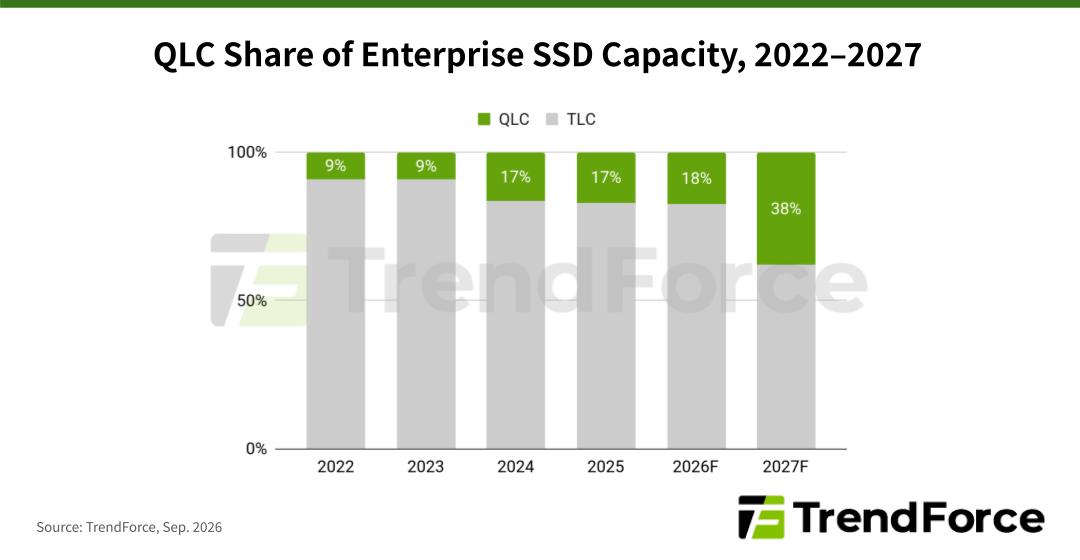
2026 NAND Flash: AI drives explosive enterprise SSD demand, offsetting weak consumer markets. HDD shortages compel a shift to high-capacity QLC SSDs. Despite bit growth, supply for these remains structurally tight, ensuring sustained price increases and a significant market pivot.
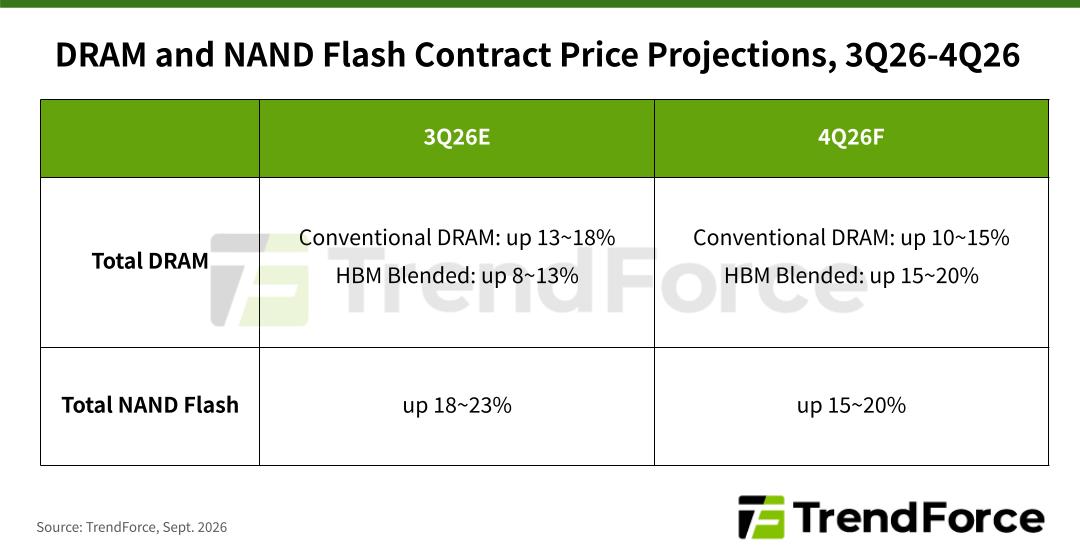
TrendForce forecasts a structural memory price hike by 2026. Strong AI server demand and profit-first supplier strategies lead to capacity shifting towards high-margin applications, driving widespread DRAM and NAND Flash price increases, despite weak consumer demand.
The NAND Flash market is robust, driven by enterprise SSD and AI demand, pushing up contract and spot prices. Micron, leveraging QLC technology and data center SSDs, has successfully transformed and anticipates continued revenue and margin growth.
Research Areas:
Industry News