[News] NVIDIA CEO Jensen Huang Reportedly Says China Could Develop Advanced Lithography Systems by 2030
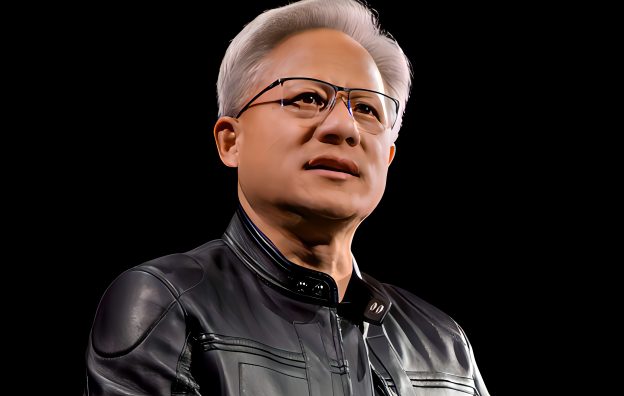
China is stepping up efforts to close its gap in advanced lithography, and one of the AI industry’s most prominent figures has weighed in on how quickly it could catch up. According to Tom’s Hardware, NVIDIA CEO Jensen Huang believes the country could develop its own advanced lithography systems within three to four years. In an interview with The All-In Podcast, Huang said China could “get there” by 2030, citing the country’s strength in high-volume manufacturing.
However, a recent UBS assessment offers a more cautious outlook. According to Bloomberg, the bank estimates that China could achieve high-volume production of immersion DUV systems within two to five years, but is unlikely to develop EUV tools within the next decade. UBS nevertheless sees signs of progress, pointing to rising Chinese patent activity, particularly in light sources and laser subsystems. The bank sees China’s capabilities as roughly comparable to where ASML stood around 2004, about 15 years before the Dutch company began mass-producing EUV systems.
China Steps Up Domestic DUV Efforts
Recent developments point to continued advances in DUV lithography. According to the Financial Times, Huawei is reportedly backing domestic suppliers developing critical components for advanced chipmaking equipment, including Shanghai-based Yuliangsheng, which has co-developed an advanced domestically made DUV lithography machine. The company is reportedly set to produce 12 systems by the end of 2026, with the machines being tested by SMIC and on Huawei’s own production lines. Still, prototypes of the system still rely on foreign components, particularly projection lenses and light sources, where Chinese suppliers continue to trail overseas rivals, the report adds.
EUV Remains a Much Bigger Hurdle
China remains much further behind in EUV lithography. A 2025 Reuters report revealed that China had completed an operational EUV prototype earlier that year at a high-security facility in Shenzhen. Built with the involvement of former ASML engineers, the machine reportedly fills nearly an entire factory floor and can generate EUV light, but has yet to produce a working chip.
Major technical hurdles remain, particularly in the precision optics needed for EUV systems. Reuters notes that China has struggled to replicate optical systems supplied to ASML by Germany’s Zeiss. Beijing is reportedly targeting 2028 to produce working chips using the system, while sources close to the project see 2030 as a more realistic timeline.
Read more
- [News] China’s DUV Could Reach High-Volume Production in 2–5 Years; EUV Reportedly Unlikely Within a Decade
- [News] Huawei Reportedly Backs China’s DUV Drive, with 12 Systems Targeted by End-2026; SMIC Testing Underway
(Photo credit: NVIDIA)