[Insights] NVIDIA RTX 60 May Slip to 2028, AMD RDNA 5 Also in Question: Why Are Gaming GPU Cycles Slowing?
For more than a decade, PC gamers have grown accustomed to new generations of GeForce or Radeon graphics cards roughly every two years. But that upgrade cycle now appears to be slowing. According to Zhu Shi’s column on TechNews, NVIDIA launched its RTX 30 series in 2020, followed by the RTX 40 series in 2022 and RTX 50 series in early 2025, maintaining a cycle of just over two years. Recent rumors, however, suggest the RTX 60 series could be delayed until 2028, with similar speculation surrounding AMD’s RDNA 5. If true, consumer GPU upgrade cycles could stretch to roughly three years.
AI is a major factor behind the potential shift. According to NVIDIA‘s August earnings report, quarterly Data Center revenue reached US$89 billion, accounting for approximately 92.5% of its US$96.2 billion total revenue. Gaming is no longer its primary revenue driver, with R&D resources and memory supplies increasingly directed toward AI. Amid strong AI accelerator demand and rising memory prices, even the RTX 50 SUPER series has reportedly been put on hold due to GDDR7 costs.
Another factor is the weakening incentive to upgrade. TechSpot‘s testing found that the RTX 5080 outperformed the RTX 4080 SUPER by an average of just 4% at 1440p and 11% at 4K in traditional gaming benchmarks without frame generation. While these results do not represent the entire RTX 50 lineup, they help explain why native FPS gains alone are becoming less convincing reasons to upgrade.
Advances in integrated graphics are also putting pressure on the market for entry-level discrete GPUs. Intel’s Panther Lake Arc B390, AMD’s Strix Halo Radeon 8060S, and the Blackwell GPU in RTX Spark show that high-performance integrated graphics are no longer limited to basic productivity and video playback. For thin-and-light laptops, Mini PCs, and entry-level gaming systems, a capable SoC could eliminate the need for a discrete GPU, along with its added cost, power consumption, and cooling requirements.
GPU Makers Rethink Consumer Strategies as AI Reshapes the Market
AMD’s strategy reflects a similar shift. Its RDNA 4 generation debuted with the RX 9070 XT and RX 9070, targeting mainstream and upper-midrange segments rather than directly challenging NVIDIA’s flagship GPUs. This suggests GPU makers are prioritizing product positioning and returns on investment over refreshing every price segment with each generation.
Slower graphics card upgrade cycles do not necessarily signal stagnating technology. Instead, the GPU market is changing as AI data centers become a major growth engine, consumer GPU innovation increasingly relies on software such as DLSS and FSR, and integrated graphics continue to challenge entry-level discrete GPUs. For NVIDIA and AMD, refreshing their entire consumer GPU lineups every two years may no longer be a business necessity.
Read more
- [News] NVIDIA’s Memory Shake-Up: Rubin Ultra Rethinks 12-Hi HBM4E for 8-Hi HBM4, Rubin GPU Bandwidth Cut 13%
- [News] NVIDIA RTX PRO 5500 Reportedly Draws $35B in China Orders, with Supply Seen at Just 5–10%
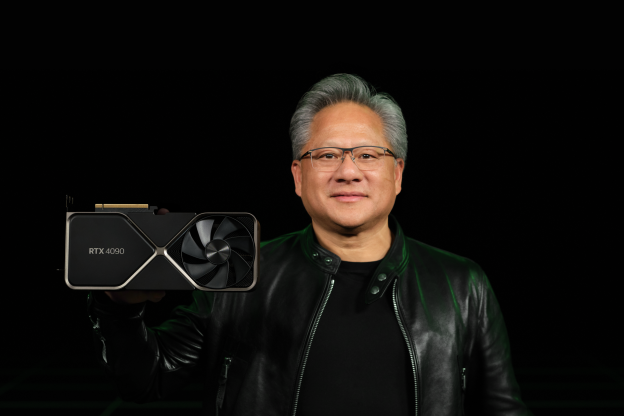
(Photo credit: NVIDIA)