[News] CXMT Reportedly Ships HBM3E Samples, Eyes Production Within 2 Months Despite 20–30% Yields
China’s CXMT is reportedly preparing to begin limited production of HBM3E despite significant yield challenges. According to Reuters, citing sources, CXMT’s HBM3E yields currently stand at just 20% to 30%, well below the approximately 70% achieved by South Korea’s SK hynix. The company has reportedly delivered HBM3E samples to several domestic AI chip designers and expects to begin limited production within the next two months. It has provided customers with two versions of the chip: a standard design and a revised version incorporating changes aimed at improving manufacturing yields.
However, low yields are expected to make CXMT’s HBM3E more expensive to produce than comparable products from overseas competitors, Reuters notes, as a significant portion of chips must be discarded or reworked. The company is nevertheless pressing ahead as Chinese AI chipmakers continue to face shortages of advanced memory needed to expand production. CXMT reportedly began developing HBM technology internally as early as 2024.
Performance remains another challenge. According to Reuters, testing showed that CXMT’s HBM3E performed closer to SK hynix’s previous-generation HBM3 than to its HBM3E. The findings highlight the technological gap between CXMT and established HBM leaders SK hynix, Samsung Electronics, and Micron, which dominate global supply.
The move also underscores China’s shortage of advanced AI memory, a critical component in Beijing’s state-backed push to scale up domestic alternatives to NVIDIA’s AI processors amid U.S. restrictions on access to foreign technology, the report indicates.
China’s AI Chipmakers Eye Domestic HBM Amid Supply Shortages
The shortage is already driving up costs for Chinese AI chipmakers. Reuters noted in September that Huawei, Cambricon, MetaX, and Iluvatar CoreX had reportedly raised prices for current and next-generation AI chips by 20% to 50% as rising memory costs complicated efforts to expand production. The report also indicated that Chinese chipmakers have increasingly relied on costly grey-market HBM supplies following tighter U.S. export restrictions.
Earlier reports have also identified potential customers for CXMT’s HBM3E. As noted by Seoul Economic Daily in September, citing The Information, Alibaba’s chip design unit T-Head and Cambricon Technology were reportedly testing the memory for use in their in-house processors. If development proceeds as planned, products incorporating CXMT’s HBM3E could reach the market as early as 2027.
CXMT itself has provided few details on its HBM development progress. According to Southern Metropolis Daily, the company’s management did not directly address questions about the technology during a September investor briefing, saying only that it would continue developing products and processes according to its existing roadmap. An analyst cited by the report noted that while HBM3E samples may have been delivered, it remained unclear whether they could meet domestic customers’ requirements or how soon CXMT could achieve stable, large-scale production.
Read more
- [News] CXMT Accelerates 4F² DRAM Push, Eyes Year-End Server DDR5 RDIMM Launch
- [News] CXMT’s Earnings Boom Faces Test as 3Q Profit Growth Slows to 1–4% QoQ: What’s Behind the Slowdown?
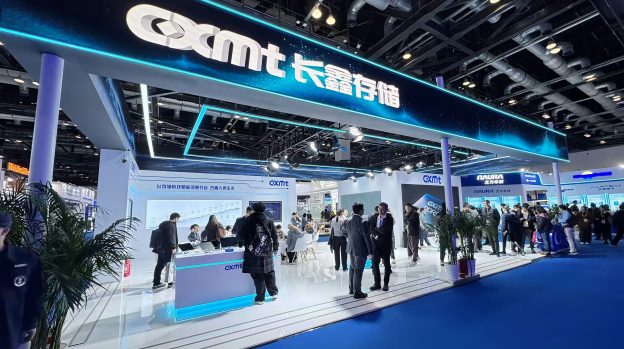
(Photo credit: CXMT)