[News] Unimicron Warns of IC Substrate Crunch: Up to 30-Month Equipment Lead Times, 20% Material Gap in 2027
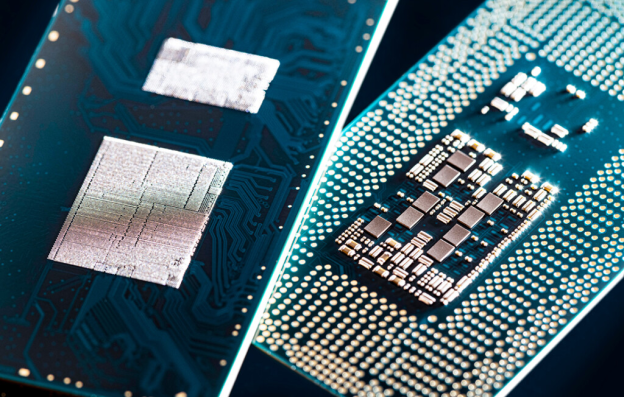
As AI accelerator demand fuels the rise of advanced packaging technologies such as CoWoS and EMIB, supply bottlenecks are spreading to critical materials and equipment. According to Wealth Magazine and the Economic Daily News, citing leading Taiwanese IC substrate maker Unimicron, lead times for some key equipment have stretched to 30 months, while critical materials could face a 20% supply shortfall in 2027.
Wealth Magazine, citing Unimicron Chairman S.C. Chien at Taiwan Printed Circuit Association (TPCA) Show on October 20, reports that on the materials side, low-CTE glass fiber cloth, copper-clad laminates (CCL), and ABF are particularly facing tight supply. Meanwhile, lead times have lengthened for more than 80% of equipment, with over 20% seeing delays of more than double their original lead times, according to Chien.
These supply constraints come amid a widening gap in capacity expansion across the AI supply chain. According to Wealth Magazine, Chien projected CoWoS capacity to grow 6.8-fold by 2028 from 2024 levels, alongside a 6.3-fold increase in hyperscaler capex. IC substrate capacity, by contrast, is expected to merely double, while DRAM capacity would expand 1.8-fold, he added.
Chien cautioned, however, that these growth multiples do not necessarily signal supply shortages, given the different capacity bases across segments. Still, with DRAM and substrate shortages already emerging in 2025 and 2026, prolonged equipment lead times and tight material supply could make it increasingly difficult to synchronize capacity expansion across the industry, Wealth Magazine notes.
AI Substrates Eye 9x Reticle Size by 2028, Raising Technical Hurdles
Beyond supply constraints, the rapid growth in AI substrate size is adding pressure on manufacturers. According to MoneyDJ, citing Chien, substrate sizes have expanded from roughly 1x reticle size in early designs to 3x in 2025, with 5x targeted for 2026 and 5–9x by 2027–2028. Sizes could eventually reach 12–14x, he noted.
As GPU-HBM platforms scale up and hyperscalers advance custom ASICs, XPUs and heterogeneous integration, IC substrates and PCBs are becoming critical to system-level performance rather than merely components built to specifications, according to Central News Agency.
The shift also brings mounting technical challenges. Chien noted that AI chips can draw currents exceeding 1,000 amperes, putting greater demands on power integrity, high-speed signal transmission, thermal management and thermomechanical reliability, Central News Agency reports. As substrate sizes potentially approach 12–14x reticle size, increasingly stringent fine-line requirements could exceed the capabilities of individual substrate makers, further complicating yield improvements, he added.
The yield challenge is already evident in Intel’s EMIB (Embedded Multi-die Interconnect Bridge) supply chain. As previously reported, growing interest from external customers has put substrate yields in the spotlight, with industry sources indicating an improvement to around 45% recently. Suppliers are reportedly targeting 50% by 4Q26 and 60% by 1Q27, underscoring the hurdles that remain as advanced packaging gains momentum.
Read more
(Photo credit: Unimicron)