[News] DRAM Prices Seen Rising 20% QoQ in 4Q26 Despite Slower Gains; AI Demand, Tight Supply Support Outlook
The memory industry faces growing concerns over technological advances by Chinese rivals, potential HBM specification changes, and the sustainability of AI capital spending. However, according to Commercial Times, institutional investors remain optimistic about the industry’s long-term outlook, supported by expanding AI inference demand and limited new supply of mature memory products. Fourth-quarter DRAM contract prices are expected to rise about 20% quarter-on-quarter.
Still, the projected increase marks a slowdown from approximately 80% in the second quarter and 40% in the third, reflecting a higher comparison base, weakening end-market purchasing power, and price ceilings under long-term agreements (LTAs) gradually taking effect, the report notes.
CXMT’s 4F² DRAM Advances, but Mass Production Remains Uncertain
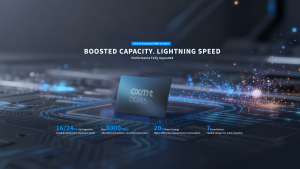
China’s CXMT has announced progress in its next-generation 4F² DRAM architecture, raising concerns about potential supply expansion. According to Commercial Times, institutional investors note that the architecture could theoretically reduce memory cell area by about 33% compared with the mainstream 6F² design, though smaller cells do not necessarily translate into proportional gains in usable bits per wafer.
MoneyToday adds that CXMT’s announcement has yet to significantly affect DRAM spot prices, which continue to rise. Industry sources cited by MoneyToday caution that mass production still faces challenges involving yields, leakage current, and data retention. The report also notes that it remains unclear whether CXMT’s 4F² design applies to the entire DRAM cell or only specific areas, with full commercialization of the technology generally expected after 2028.
Chinese memory makers are also emerging as potential bargaining chips for U.S. tech giants seeking lower prices. According to Chosun Biz, companies including Apple and Tesla have raised the possibility of turning to Chinese suppliers such as CXMT and YMTC as memory costs climb. However, analysts see limited near-term pressure on prices, given constraints on Chinese suppliers’ pricing competitiveness, available volumes, and sales markets.
NVIDIA’s HBM Trade-Off and AI Memory Demand Outlook
With memory supply still tight, GPU makers are considering lower HBM capacities to support higher GPU shipments. According to Commercial Times, if NVIDIA switches Rubin Ultra from 12-Hi to 8-Hi HBM while keeping the number of stacks per GPU and capacity per DRAM layer unchanged, HBM capacity per GPU would fall by about 33%, while the same DRAM die supply could theoretically support 50% more GPUs.
The shift also has pricing implications. TrendForce notes that although 8-Hi HBM stacks use fewer DRAM dies than 12-Hi stacks, both require one base die. Because 8-Hi stacks offer less memory capacity, the base die accounts for a larger share of the cost per Gb. As a result, 8-Hi HBM is expected to cost 10–20% more per Gb than 12-Hi in 2027.
Institutional investors cited by Commercial Times note that larger AI models, longer context windows, and growing KV cache requirements are driving demand for greater memory capacity and bandwidth, particularly server DRAM and enterprise SSDs. With major memory makers prioritizing high-end products, they expect the industry’s supply-demand balance to remain more resilient than in previous cycles.
Read more
- [News] CXMT Accelerates 4F² DRAM Push, Eyes Year-End Server DDR5 RDIMM Launch
- HBM Supply Constraints Persist, 2027 Price Outlook Revised Upward with Blended ASP Forecast to Rise 121% YoY, Says TrendForce
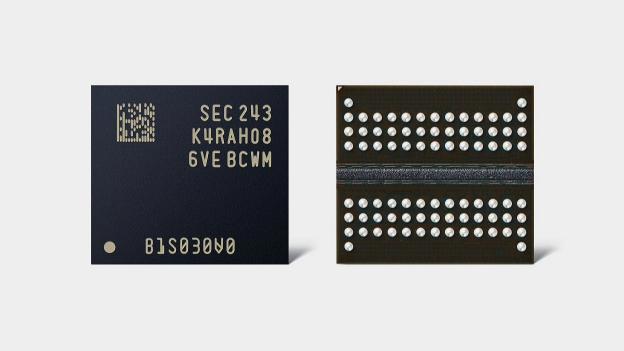
(Photo credit: Samsung)