[News] China Reportedly Spent $13B+ Stockpiling ASML DUV Tools in 2024–25 as Advanced Chip Push Continues
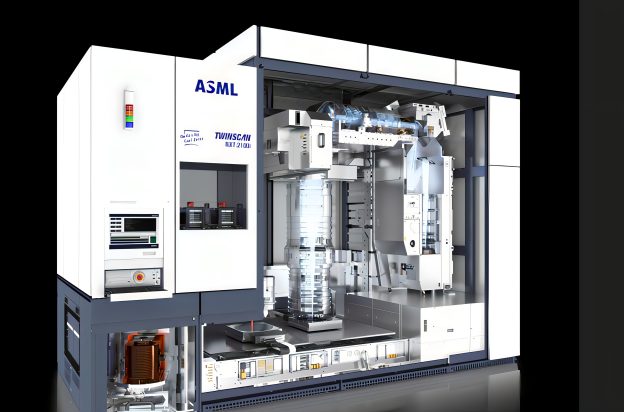
China has reportedly built up a sizable stockpile of advanced DUV lithography equipment despite tightening export controls, giving its chipmakers greater capacity to support semiconductor production. According to South China Morning Post, Chinese-owned fabs had acquired an estimated 343 immersion deep ultraviolet (DUV) lithography systems by early 2026, citing a report published in late September by the Centre for Technology & Statecraft (CTS), a Washington-based research group established in August.
While less advanced than EUV, these systems can be adapted to produce 7nm-class logic chips and advanced memory used in AI processors, including Huawei’s Ascend series, the report states. Much of China’s DUV buildup has centered on ASML’s NXT:1980i. As cited by South China Morning Post, the CTS report estimates that around 270 of the systems acquired by Chinese-owned fabs were Twinscan NXT:1980i immersion DUV machines. Chinese fabs spent more than US$13 billion acquiring about 90 of these systems in 2024 and another 89 in 2025.
China’s reported purchases are also reflected in ASML’s financial disclosures. China accounted for 41% of the company’s net system sales by shipment destination in 2024 and 33% in 2025, South China Morning Post notes.
The buildup comes as the Netherlands has tightened export controls on advanced lithography equipment. As South China Morning Post notes, the Dutch government began requiring export licences for ASML’s NXT:2000i and more advanced immersion DUV systems in September 2023. The requirement was extended to the NXT:1980i a year later, although exports of that model can still be approved on a case-by-case basis.
Export-Control Loophole Draws U.S. Scrutiny
The CTS report, as cited by South China Morning Post, argues that the existing approach leaves a significant loophole, warning that equipment sold for mature-node production can potentially be repurposed or relocated to advanced manufacturing lines. U.S. lawmakers are seeking to close that gap through broader restrictions. The report highlights the bipartisan MATCH Act, introduced in April, which seeks China-wide restrictions on the sale and servicing of chipmaking equipment that China cannot readily manufacture domestically, explicitly including immersion DUV systems.
DUV Access Could Shape China’s AI Chip Capacity
While tighter restrictions would have little immediate impact because Chinese fabs have already accumulated a substantial inventory of imported equipment, their longer-term effect could be significant, South China Morning Post notes, citing the CTS study. The study illustrates the potential impact through two theoretical scenarios. Under its most expansive projection, if China overcame other chipmaking bottlenecks and continued importing around 90 NXT:1980i systems a year, its DUV fleet could support annual production of up to 434 million AI chips equivalent to NVIDIA’s H100 by 2035. By contrast, if new imports were halted in 2027, that theoretical production ceiling would fall to 153 million units annually by 2035.
At the same time, China is stepping up efforts to reduce its reliance on imported lithography equipment. According to Financial Times, Huawei is playing a growing role in coordinating the country’s domestic DUV push, backing suppliers developing critical components and helping equipment makers bring their systems into Chinese fabs. One of the most advanced efforts reportedly involves Shanghai-based Yuliangsheng, which has co-developed China’s first domestically made advanced DUV lithography machine. The company is reportedly set to produce 12 systems by the end of 2026, with its equipment being tested by Chinese chipmakers including SMIC and on Huawei’s own production lines, Financial Times notes.
Read more
- [News] Huawei Reportedly Backs China’s DUV Drive, with 12 Systems Targeted by End-2026; SMIC Testing Underway
- [News] China’s DUV Could Reach High-Volume Production in 2–5 Years; EUV Reportedly Unlikely Within a Decade
(Photo credit: ASML)