[News] Huang’s Exit Raises Questions Over NVIDIA’s CPO Roadmap and Supply Chain; TSMC Ties Expected to Hold

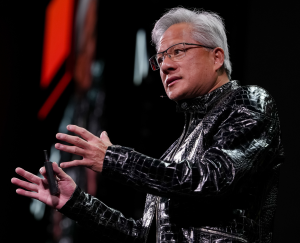
NVIDIA CEO Jensen Huang’s resignation has raised concerns across the semiconductor industry over its potential impact on the company’s supply chain. According to Commercial Times, AMD and ASIC developers are aggressively competing for advanced process and packaging capacity in 2027. Industry observers suggest that NVIDIA’s existing manufacturing arrangements with TSMC are unlikely to face immediate disruption, given the lengthy process development and qualification requirements involved. However, smaller suppliers of critical components, where capacity is limited and expansion often depends on direct coordination between senior executives, could be more vulnerable to shifts in capacity allocation priorities.
One key area of concern is the pace of co-packaged optics (CPO) adoption. Commercial Times notes that NVIDIA has been a key driver of CPO commercialization. With yields for some solutions still below expectations, the report suggests that a more cautious approach by NVIDIA’s new leadership could slow CPO adoption, potentially prompting suppliers to turn increasingly to near-packaged optics (NPO) solutions.
Economic Daily News also highlights Huang’s role in driving the adoption of new materials and technologies across NVIDIA’s supply chain, including CPO. His departure has raised concerns over potential changes to key specifications for NVIDIA’s planned 2028 Feynman AI platform.
Meanwhile, Central News Agency reports, citing semiconductor industry executives, that while Huang’s departure could shift some AI chip demand from GPUs toward ASICs, overall AI market demand is expected to remain strong, limiting the broader impact on the supply chain. Commercial Times also reports, citing industry sources, that Huang’s departure is expected to have limited impact on NVIDIA’s existing operations, with his eventual return remaining a possibility.
Vera Rubin Ramp-Up Delay and HBM Supply Outlook
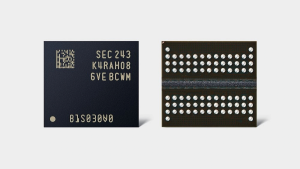
Separately, Economic Daily News reports that HBM4 memory supply bottlenecks have delayed the reported ramp-up timeline for NVIDIA’s Vera Rubin platform from late 2026 to the first half of 2027, leaving GB300 servers as the mainstay for now. Institutional investors suggest that the delay could have varying effects on Taiwanese suppliers.
Server manufacturers such as Foxconn and Quanta are unlikely to be affected, having already moved past the learning curve and developed the ability to deliver at scale. However, Economic Daily News highlights potential setbacks for suppliers of next-generation 800V DC power systems, high-end M9 substrate materials, and optical communications components that had expected a shipment boost from the Vera Rubin ramp-up.
Read more
- [News] NVIDIA without Huang: New Tests Ahead as AMD Eyes Gains, TSMC Finds a Cushion and Memory Giants Weigh Risks
- [News] NVIDIA’s CEO Succession: Three Scenarios, from Huang’s Rumored Comeback to Internal and External Picks
(Photo credit: NVIDIA)