

Optical Fiber Spot Prices Surge Severalfold in 2026, with Data Center-Driven Supply Shortages Expected to Persist Through 2028, Says TrendForce
AI data centers, data center interconnects, and high-capacity backbone network deployments are driving rising demand for optical fiber. According to TrendForce’s latest telecommunications industry research, this is expected to lead to a global supply shortfall of 180 million fiber-kilometers in 2026.
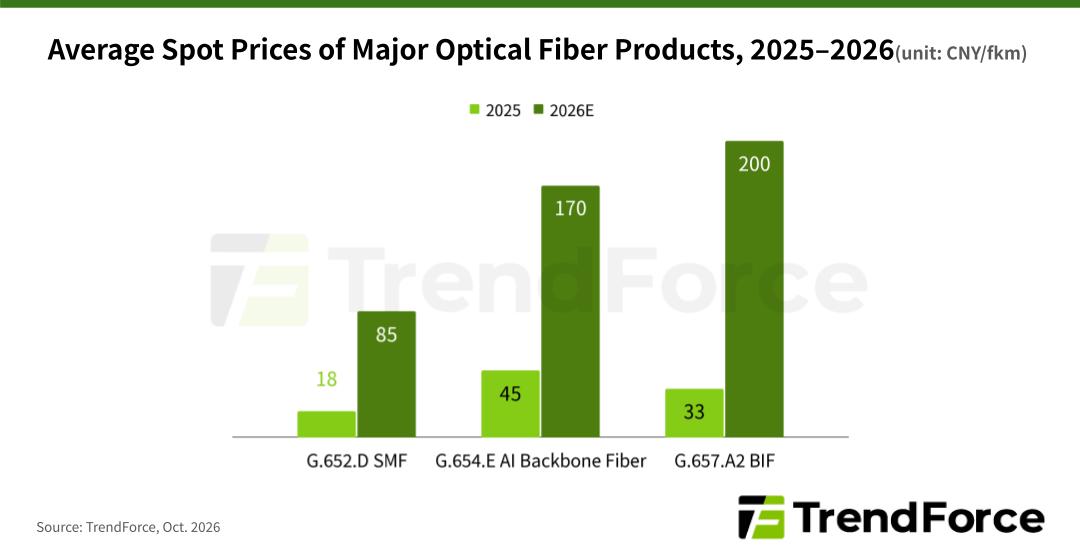
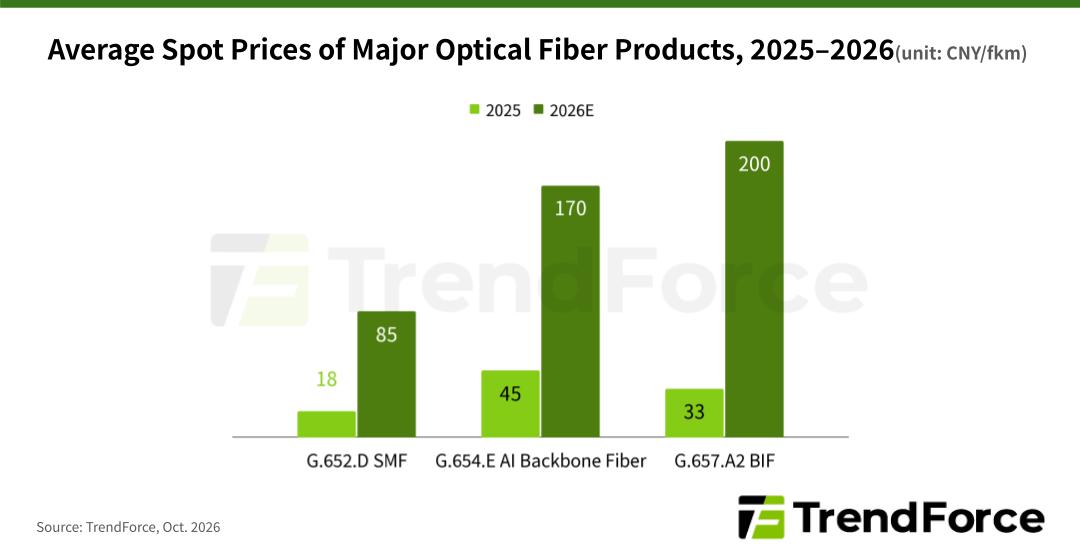
Tightening supply is projected to push spot prices for finished optical fiber products to 2.8–5 times their 2025 levels or higher. In response, telecom operators are shifting from short-term purchasing to long-term supply agreements (LTAs) to lock in fiber supply early.
TrendForce notes that substantial demand from AI data center-related applications has tightened global optical fiber supply since late 2025, with shortages expected to persist until at least 2028.
On the supply side, global optical fiber capacity utilization has climbed to 92% in 2026, while inventory levels have fallen from four months in 2024 to just one month. Some leading suppliers are already booked into the first quarter of 2027, indicating that existing production capacity is running close to full.
Meanwhile, expanding optical fiber preform capacity requires installing deposition equipment and establishing production processes, typically taking 18–24 months. Even with expansions in the planning stage, new capacity will take time to come online, limiting meaningful supply growth in the near term.
Global optical fiber demand is estimated to reach 577 million fiber-kilometers in 2026, driven primarily by data center construction, which accounts for roughly 18–20% of the total. That share is projected to rise to 30–35% in 2027. Beyond continued AI data center expansion by hyperscale CSPs, chipmakers and telecom operators are also investing in related infrastructure, further lifting fiber demand for data center interconnects and high-capacity backbone networks.
TrendForce’s research shows that the widening supply-demand imbalance has driven a sharp increase in spot quotations for finished optical fiber products. For example, the average price of bend-insensitive fiber (BIF) used for cabling within data centers is expected to average more than five times its 2025 level in 2026.
Prices for AI backbone fiber used in data center interconnects and high-capacity backbone networks are projected to reach approximately 2.8 times their 2025 levels, while quotations for mainstream telecom fiber are expected to rise to around 3.7 times their previous levels.
Telecom operators are increasingly turning to long-term agreements (LTAs) to secure future fiber requirements as supply conditions continue to tighten. In September 2026, Verizon and Corning signed a multi-year supply agreement covering 129 million fiber-kilometers (approximately 80 million fiber-miles) of high-density optical fiber and connectivity solutions for delivery between 2027 and 2032. The fiber will support broadband deployments as well as high-capacity backbone networks connecting AI data centers.
TrendForce believes the current optical fiber shortage differs from past telecom infrastructure cycles, as it stems from sustained growth in incremental demand tied to AI data centers. With supply unable to scale quickly in the near term and demand continuing to grow steadily, using LTAs to lock in fiber supply early are expected to become increasingly common among telecom operators and large infrastructure providers.
For more on the latest technology industry news and trends, please visit News.