[News] SK hynix 3Q Earnings Preview: Record Profit at 78% Operating Margin; HBM4, LTAs, Solidigm in Focus
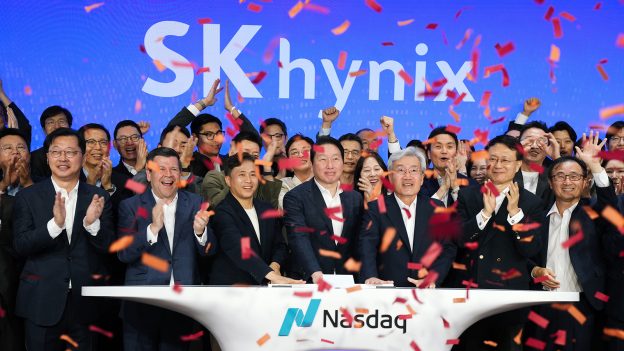
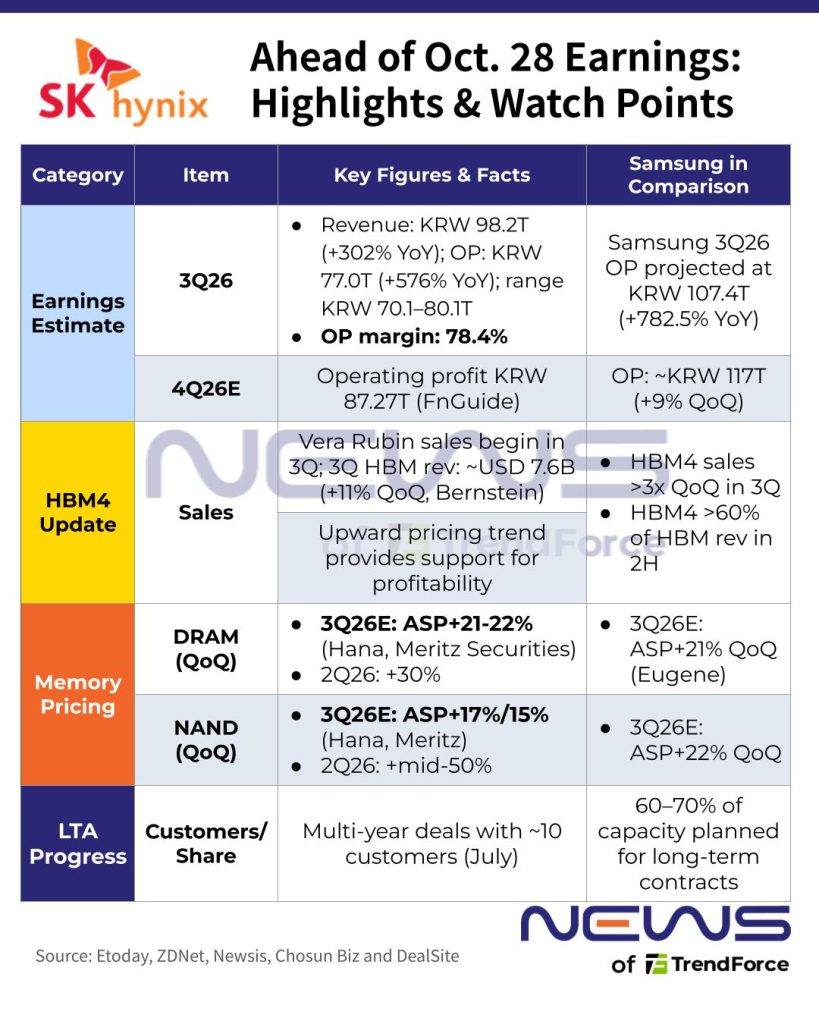
With Samsung already projecting a 782.5% year-over-year surge in 3Q26 operating profit to KRW 107.4 trillion, SK hynix appears poised to follow suit with record earnings when it reports on October 28. Citing market estimates, South Korean media expect the HBM powerhouse to post an all-time high operating profit of KRW 76–77 trillion, with operating margins topping 78%.
Yet beyond the record numbers, questions remain over SK hynix’s HBM4 ramp-up and memory pricing outlook, while Solidigm’s recent decision to shelve its IPO adds another twist. Here’s a preview of the key topics ahead of SK hynix’s upcoming earnings call.
SK hynix’s 3Q Profit Seen Soaring 576% as Operating Margin Nears 80%
According to Newsis, market consensus projects SK hynix’s 3Q26 consolidated revenue at KRW 98.23 trillion and operating profit at KRW 76.96 trillion, soaring 301.76% and 576.11% year over year. As Chosun Biz notes, that would translate into a hefty 78.4% operating margin, with profit expected to climb further to KRW 87.27 trillion in the fourth quarter.
Yet beneath the bullish outlook, brokerage estimates remain widely split. According to Chosun Biz, SK Securities projects third-quarter operating profit of KRW 79 trillion, while DS Investment & Securities and Meritz Securities offer sharply contrasting forecasts of KRW 70.1 trillion and KRW 80.1 trillion, respectively—a gap of KRW 10 trillion.
DRAM ASPs Seen Rising 21% QoQ; HBM4 Price Gains in Focus
A key earnings driver for SK hynix is the growing contribution from HBM4, with sales of the sixth-generation memory for NVIDIA’s next-generation Vera Rubin AI platform beginning to be reflected in third-quarter results.
However, Chosun Biz, citing industry sources, reports that SK hynix’s HBM4 shipments may have fallen short of expectations for a second consecutive quarter in 3Q26, amid delays in NVIDIA’s Rubin rollout and longer-than-expected performance tuning for mass-produced chips.
Still, stronger pricing could help offset slower shipments. According to Money Today, citing JPMorgan, HBM4 ASPs are estimated to rise 121% by 2027 compared with 2025 levels. Against this backdrop, FnGuide’s consensus also points to further earnings growth, with SK hynix’s fourth-quarter operating profit projected at KRW 87.27 trillion.
Beyond HBM, broader memory pricing remains another bright spot. Following a 30% jump in DRAM ASPs and a mid-50% surge in NAND ASPs in 2Q26, DealSite, citing Hana Securities, expects third-quarter DRAM ASPs to rise another 21% QoQ. That could lift the DRAM segment’s operating margin to 83%, while NAND ASPs are projected to gain 17% sequentially, the report adds.
LTA Update
Long-term supply agreements (LTAs) are another key topic, as clients move to lock in memory amid tightening supply. While Samsung reportedly plans to allocate 60–70% of its memory production capacity to long-term contracts, SK hynix disclosed at its July earnings call that it had signed multi-year deals with around 10 customers, including major clients.
The shift toward longer commitments is gaining traction among U.S. tech giants. According to Business Post, citing KeyBanc, HP and Dell have extended their memory supply agreements with Micron through 2031, while Google parent Alphabet is seeking contracts with memory suppliers lasting until 2035. Such moves could further strengthen demand visibility for Samsung and SK hynix as customers seek to secure supply years in advance.
Solidigm’s Shelved IPO Puts Expansion Funding in Focus
SK hynix’s decision to shelve the IPO of its U.S. subsidiary Solidigm has raised fresh questions over how it will finance future NAND capacity expansion in the U.S. With no concrete funding plan disclosed, potential options range from internal cash and borrowing to joint ventures (JVs) and customer-backed financing tied to long-term supply agreements, according to Hankook Ilbo.
Among these, JVs could offer an alternative to debt-heavy financing. As The Bell notes, building a memory fab can cost tens of trillions of won, making it increasingly difficult to rely solely on loans or bonds. Bringing in outside investors would allow SK hynix to share construction costs and subsequent capital spending.
Major cloud service providers (CSPs) could emerge as potential partners, given their growing appetite for Solidigm’s NAND-based storage products. The Bell suggests that investing in a JV could help these customers secure long-term capacity while easing SK hynix’s funding burden.
(Photo credit: SK hynix)