[News] Intel CEO Lip-Bu Tan Calls DeepSeek, Kimi, GLM Good Enough, Notes Low Token Costs and Fast Adoption
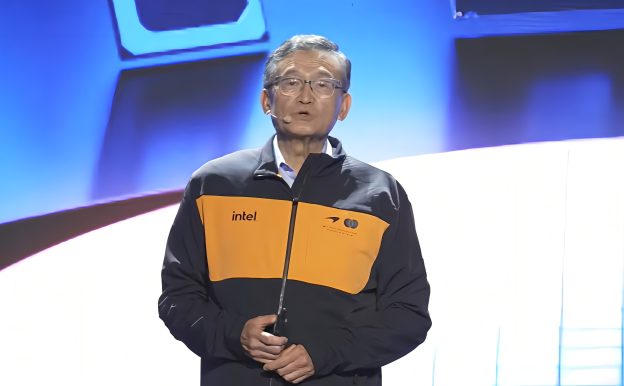
Chinese AI models are gaining traction as competitive performance and lower costs drive rapid adoption. According to Reuters, Intel CEO Lip-Bu Tan noted that Chinese frontier AI models have lower token costs and are seeing “very fast” adoption, while models such as DeepSeek, Kimi, and GLM deliver performance that is “good enough.”
Tan also expressed strong support for open-source AI, describing it as the best way to improve efficiency. He added that market demand will ultimately determine which models are best suited to different use cases, as Reuters indicates.
Unwire Pro notes that Intel sells chips rather than AI models, meaning wider adoption of low-cost and open-source models could increase demand for AI hardware. Tan’s remarks may therefore reflect Intel’s commercial interests, although the price differences between models remain evident.
Chinese AI Models Offer Significant Cost Advantages
The cost gap is particularly evident in application programming interface (API) pricing. According to Unwire Pro, third-party pricing data from October shows that DeepSeek V4.1 Flash costs US$0.15 per million input tokens and US$0.60 per million output tokens during off-peak hours, compared with US$2 and US$10 for OpenAI’s GPT-6.1 Sol, and US$4 and US$20 for Anthropic’s Claude Opus 5.5, respectively. For a workload of one million input and one million output tokens, this translates to US$0.75 for DeepSeek, versus US$12 for GPT-6.1 Sol and US$24 for Claude Opus 5.5.
However, the price gap varies by model and usage conditions. DeepSeek’s rates double during peak hours to US$0.30 for input and US$1.20 for output, while other Chinese models are not necessarily as inexpensive. Kimi K3, for instance, charges US$10 per million output tokens, matching GPT-6.1 Sol, while GLM 5.3 charges US$4.40, or 44% of GPT-6.1 Sol’s rate, Unwire Pro notes.
Chinese AI Models Gain Ground Among Developers and U.S. Businesses
The rapid adoption of Chinese AI models is also reflected in developer usage. According to Yicai, Chinese models accounted for approximately 61.2 trillion tokens on OpenRouter during the week of September 7–13, nearly three times the 21.8 trillion tokens recorded by U.S. models. Chinese models have led U.S. counterparts on the platform for 20 consecutive weeks, with lower costs emerging as a key factor in developers’ model choices. However, Yicai notes that the figures cover only OpenRouter traffic and do not represent the broader AI market.
Chinese AI models are also gaining traction among U.S. businesses. According to The Washington Post, open-weight models developed by Chinese companies such as Moonshot AI, DeepSeek, and Alibaba can be customized by users and are significantly cheaper than the closed models offered by U.S. companies including Anthropic and OpenAI. While the latter remain more advanced, companies such as DoorDash and Airbnb have found Chinese models sufficient for many routine tasks, the report notes.
Read more
- [News] DeepSeek Reportedly Expands Huawei Chips to AI Training; New Supply Could Arrive in 4Q26
- [News] CXMT, YMTC Ramp Memory Capacity, but China’s AI, Cloud Boom Could Soak Up New Supply Through 2027
(Photo credit: Intel)