[News] AI Chip Testing Capacity Tightness Prompts Customers to Lock In 1-Year-Plus Deals; Sigurd Hikes Prices
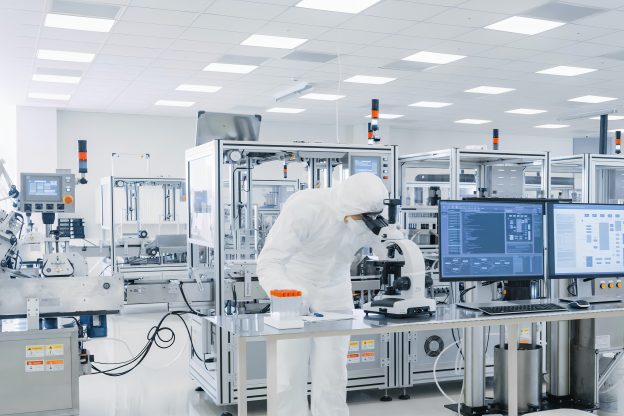
Semiconductor testing demand is surging as increasingly complex AI chips require more intensive processes, tightening available capacity. According to STAR Market Daily, OSAT provider Sigurd Microelectronics has posted monthly revenue above NT$2 billion for three consecutive months, with customers increasingly signing long-term agreements to secure testing capacity. Most have signed capacity agreements lasting more than a year, while others have reserved capacity through dedicated equipment. Some memory customers are even willing to pay premiums to lock in capacity.
Asked about pricing, Sigurd said it could not speak for the industry but confirmed that it has already begun raising its own prices. AI, CPUs, GPUs, ASICs, and silicon photonics generated about NT$3.7 billion in revenue for Sigurd in the first nine months of 2026, up from roughly NT$2.5 billion a year earlier, with their share of total revenue rising from 20% to 24%. The company expects the share to exceed 30% in 2027, according to TechNews.
Silicon photonics is also emerging as a key growth driver. Sigurd has expanded its optical communications testing capabilities to cover EICs, PICs, and optical engines, providing services spanning testing technology, R&D engineering, and volume production, TechNews notes.
Strong demand is also accelerating capacity expansion. Sigurd’s second Hukou plant began production in July, with about 40% of capacity online as of October and already locked in by customers. Its Zhongxing Plant 3 is scheduled for completion in the fourth quarter of 2026 and volume production in the first quarter of 2027, providing additional capacity, according to STAR Market Daily.
Sigurd has raised its 2026 capex to NT$8.8 billion, 48% above its original plan, with spending focused on advanced testing equipment. The company is also in discussions with several key customers and could raise capex again in the coming months, STAR Market Daily notes.
Rising AI Chip Complexity Drives Testing Demand
AI chip upgrades are sharply increasing testing time and costs. According to Seoul Economic Daily, citing Nomura Securities, NVIDIA Blackwell’s final test time is estimated to be four times that of Hopper, while Rubin could require seven times as long. Testing’s share of GPU manufacturing costs is also projected to rise from 1.9% for Hopper to 2.5% for Blackwell and 3.3% for Rubin. As advanced packaging makes chip structures more complex, the economic cost of process failures rises, increasing the importance of testing in protecting yields and preventing defects.
The heavier testing burden is also driving equipment demand. According to ETNews, Digital Frontier and UniTest have secured a combined KRW 283.94 billion in HBM4 wafer tester orders from SK hynix this year. The report notes that as HBM complexity increases, more test items and longer testing times could drive testing equipment demand to grow faster than HBM output itself. Starting with HBM4, memory makers are also increasingly adopting dedicated testing equipment.
Read more
- [News] AI, HBM Drive Memory Testing Demand: How China’s Suppliers Are Challenging an 80%-Import Market
- [News] JEDEC Unveils First Industry-Wide Silicon Photonics Reliability Standard, Setting Rules Across Four Key Areas
(Photo credit: Sigurd)