[News] Memory Makers Reportedly Plan New Price Hikes While AI Demand Widens Enterprise-Consumer Divide
Memory prices continue to rise, though the latest increases remain uneven across the market. According to Lanjing News, citing multiple industry sources, several leading memory manufacturers have verbally informed distributors of plans to raise prices for enterprise-grade memory chips. Although formal price increase notices have yet to be issued, channel prices have already begun rising.
However, the latest increases are not market-wide. As the report indicates, they are concentrated in DRAM contract prices and enterprise SSDs at the manufacturer and distribution levels, affecting manufacturers and module makers before end consumers. One industry source noted that data centers remain the main demand driver, while other segments remain relatively weak.
Shanghai Securities News found that official fourth-quarter price increases have been modest and largely concentrated in enterprise products, with no clear signs of comparable increases in consumer memory. However, The Paper, citing memory chip distributors, reports that consumer memory prices have also risen, although weak end-market demand has left more room for price negotiations.
Module makers are among the hardest hit. Their biggest challenge is not simply higher prices, but securing sufficient supply. According to the Lanjing News report, memory manufacturers prioritize customers based on their status and contract volumes, leaving smaller module makers without reliable access to enterprise-grade products. These companies must turn to the spot market to secure components at higher prices, while prices for their finished products struggle to keep pace with rising costs.
Meanwhile, signs of price inversion have emerged in the consumer memory market. According to Lanjing News, 16GB DDR5 modules were generally quoted at around RMB 1,600 in Shenzhen’s Huaqiangbei electronics market, below the reported average contract factory price of RMB 2,000 for consumer-grade 16GB modules during the same period.
With supply remaining tight, industry sources see little immediate relief. Some manufacturers reportedly have production capacity booked through 2028, while additional near-term capacity is unlikely to resolve shortages caused by shifts in product allocation, keeping expectations of further price increases intact, the Lanjing News report notes.
AI-Driven Capacity Shifts Widen the Enterprise-Consumer Divide
Behind these pressures is a structural shift in memory manufacturers’ capacity allocation. Analysts cited by Lanjing News noted that Samsung, SK hynix, and Micron are prioritizing advanced capacity for HBM, server DDR5, and enterprise QLC SSDs, indirectly restricting supply of conventional consumer DRAM and certain NAND products.
Against this backdrop, the divergence between enterprise and consumer markets is becoming more pronounced. According to TrendForce‘s October 30 Enterprise SSD contract price report, prices are expected to rise 15%–20% in the fourth quarter of 2026, supported by strong North American demand, even as Chinese customers resist further increases.
Meanwhile, TrendForce also points to a more subdued consumer market. With notebook shipments falling 15.8% QoQ in 3Q26 and inventories rising, PC OEMs are scaling back memory procurement. PC DRAM contract prices are forecast to rise 13–18% QoQ in 4Q26, while client SSD price increases are expected to remain below 5%, marking a notable moderation from the previous quarter.
Read more
- Mounting Finished-Goods Inventories Prompt Some PC OEMs to Adjust Memory Procurement Plans for 2027, Says TrendForce
- [News] “DRAM Godfather” Kau Rejects TSMC DRAM Rumors, Flags Glut Risk from CXMT’s 10-Fab Ramp Within 2 Years
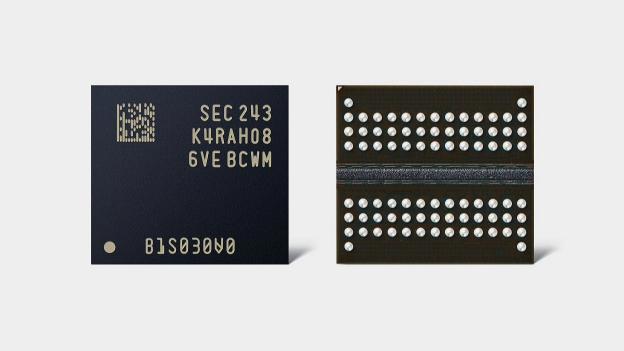
(Photo credit: Samsung)