[News] AMD Taps Flash-Based MEXT amid Memory Crunch, Aims to Cut DRAM Needs by Up to 75%
Beyond expanding its CPU lineup with Venice and Verano, AMD is turning its attention to another data center challenge: memory bottlenecks. According to Wccftech, the chipmaker has unveiled MEXT Predictive Memory Software, a flash-based solution that could slash DRAM requirements by 20–75% across EPYC servers, easing costs and supply pressures while maintaining comparable performance.
The November rollout follows AMD’s acquisition of MEXT in June. As AMD Vice President of Business Development Gary Smerdon explained, enterprises often overprovision memory to prevent performance slowdowns, according to Commercial Times. Wccftech adds that DRAM overprovisioning can reach 50%, leaving half of the allocated memory untouched by virtual machines (VMs), while another 25% remains stranded within instances. Overall, 50–80% of DRAM capacity may be underutilized as memory pages become inactive, or “cold,” the report suggests.
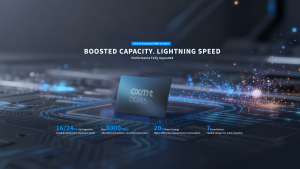
Against this backdrop, MEXT, an AI-Powered Predictive Memory solution, tackles this inefficiency by shifting idle data to flash and using AI to anticipate demand, moving data back to DRAM before applications need it to minimize latency, Commercial Times reports.
With DRAM reportedly accounting for as much as 75% of total server costs amid persistent supply shortages, the potential savings are substantial. According to Wccftech, MEXT could effectively triple available memory capacity at a fraction of the cost of adding physical DRAM, offering data centers a more economical path to expansion.
The benefits could extend beyond memory savings, particularly for agentic AI workloads. According to Wccftech, AMD claims that a 50/50 mix of DRAM and MEXT-enabled flash could boost performance per dollar by 90% in five-agent concurrent workflows and 70% in memory-intensive agent applications.
MEXT Moves Toward Commercialization
AMD is already putting MEXT to work in its own IT infrastructure. According to Wccftech, an initial deployment across 145 servers is expected to avoid roughly $4.9 million in DRAM purchases, slashing memory expansion costs by 83% compared with an equivalent DRAM-only upgrade. The chipmaker aims to expand the rollout to 2,000 servers by 2027, the report notes.
Beyond internal adoption, AMD is teaming up with Hewlett Packard Enterprise (HPE) to bring MEXT to enterprise customers, initially focusing on “MEXT Ready” systems with ample CPU cores and NVMe expansion capacity, Wccftech reports.
NVIDIA Taps CMX to Extend KV Cache Capacity
AMD isn’t the only one looking to flash to ease memory constraints. NVIDIA is taking a related, though distinct, approach in AI inference with its Context Memory Storage (CMX) platform. As generative AI and AI agents handle longer contexts, the KV cache, which stores the computation results of earlier tokens, is growing rapidly, making it costly and capacity-limited to keep entirely in HBM.
CMX adds a flash-based tier beneath GPU HBM and host DRAM, letting KV cache pushed out of HBM be stored on flash and retrieved when needed. Wccftech reports that CMX uses TLC flash connected to Rubin GPU clusters via BlueField-4 DPUs and Spectrum-X Ethernet.
Read more
(Photo credit: AMD)