[News] Samsung Sees 8nm-and-Below Utilization Topping 100% in 2027; 2nm Projects to More Than Double
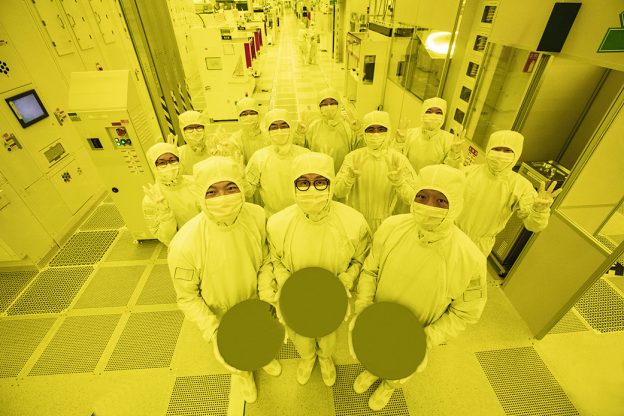
While Samsung’s memory business rode the AI boom to record 3Q26 earnings, signs of a turnaround are emerging in its foundry division. According to Financial News, Samsung expects demand for its 8nm-and-below processes to exceed capacity, with utilization projected to surpass 100% in 2027. Meanwhile, the number of 2nm projects secured in 2026 is expected to more than double YoY, Yonhap News reports.
According to Yonhap News, Samsung secured additional 2nm projects from major cloud service providers and AI/HPC customers in 3Q26, building on wins in the previous quarter. Meanwhile, Seoul Economic Daily reports that Samsung plans to begin mass production of its second-generation 2nm mobile chip, the Exynos 2700, in 4Q26, alongside ramping up 4nm NPUs for a major customer.
Samsung’s account of growing 2nm orders aligns with a recent announcement by Taiwanese ASIC firm Faraday Technology. According to Central News Agency, Faraday said on October 27 that it had secured a U.S. cloud AI chip project using 2nm gate-all-around (GAA) technology, valued at tens of millions of dollars. Samsung will handle wafer fabrication, with Taiwanese foundry UMC and memory manufacturers also participating in the project.
Against the backdrop, Samsung expects HPC to account for over 50% of its foundry revenue in 2027, Yonhap News reports. The growing importance of HPC is already evident at foundry giant TSMC, where the segment contributed 68% of total revenue in 3Q26.
New Fabs Mulled in South Korea, U.S.
With advanced-node demand outpacing capacity expansion, Samsung is considering investments in new fabs in the U.S. and South Korea to meet surging demand for 2nm AI/HPC chips, according to Yonhap News.
Green Economic Daily further explains that Samsung plans to continue expanding 8nm, 4nm, and 2nm capacity while leveraging its Taylor fab to strengthen global supply capabilities. The report adds the first Taylor foundry fab in the U.S. remains on schedule, with cleanroom operations underway and equipment installation and wafer runs for production line setup in progress.
Samsung’s U.S. expansion may soon gain further momentum. According to The Guru, the company is reportedly preparing to break ground on its second Taylor fab in November, with mass production targeted for 2030.
Beyond its longer-term expansion plans, Samsung is also eyeing stronger foundry performance in 4Q26. The company expects double-digit revenue growth and further earnings improvement, driven by second-generation 2nm mobile chip production, a ramp-up in 4nm NPUs, and stronger memory-related sales.
Losses are already showing signs of narrowing. According to Digital Today, citing Kiwoom Securities, the combined operating loss of Samsung’s foundry and System LSI businesses is projected to shrink from KRW 6.742 trillion in 2025 to KRW 3.921 trillion in 2026. Quarterly losses are also estimated to have eased to KRW 777 billion in 3Q26 after widening in the previous quarter.
Read more
- [News] Samsung Foundry Loss Reportedly Seen Shrinking 42% YoY in 2026 as HBM4 Base-Die 4nm Demand Rises
- [News] Samsung 2nm Yields Reportedly at ~55%, Below Mass Production Threshold; Qualcomm May Opt for TSMC
(Photo credit: Samsung)