[News] Micron Reportedly Ends 2GB GDDR7, Narrowing Supply Options for NVIDIA’s RTX 50 Series
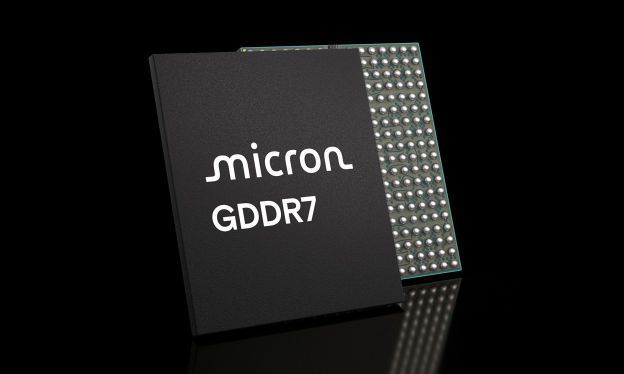
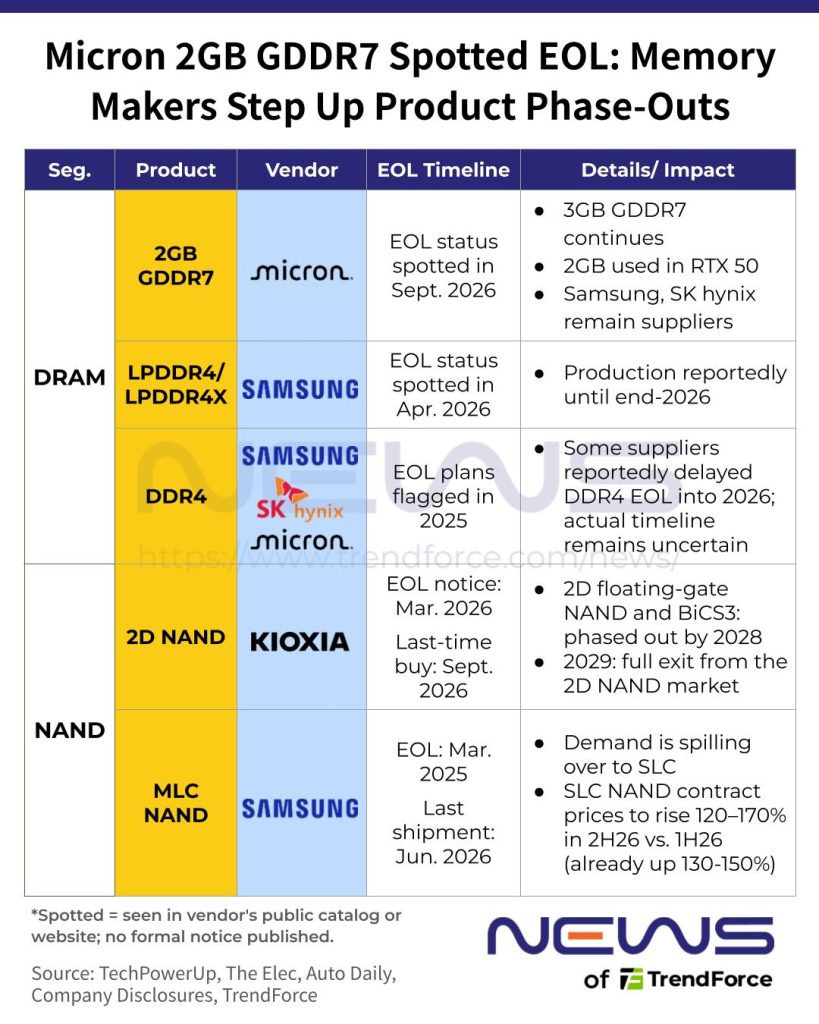
As memory supply tightens and major chipmakers prioritize long-term contracts and higher-end products, Micron is reportedly phasing out its 2 GB GDDR7 chips used in several NVIDIA GeForce RTX 50-series graphics cards. TechPowerUp and Gazlog, citing UNIKO’s Hardware, report that the products have reached end-of-life (EOL).
Micron’s product catalog now lists its 28 Gbps D8FHL chip (MT68A512M32DF-28) as EOL, with the 32 Gbps version carrying the same designation. The move leaves 3 GB modules as Micron’s only remaining GDDR7 offering, according to the reports.
TechPowerUp points out that an immediate shortage appears unlikely, as Micron only began supplying GDDR7 to NVIDIA in meaningful volumes earlier this year and has never been the primary supplier for the RTX 50 series, with Samsung and SK hynix still providing the bulk of supply. However, losing another source amid an already tight memory market could further squeeze supply, the report suggests.
According to Gazlog, when NVIDIA’s GeForce RTX 5000 series launched on January 30, 2025, Samsung was reportedly its sole GDDR7 supplier. SK hynix joined the supply chain in April, followed by Micron. Micron’s GDDR7 was first spotted on a GALAX GeForce RTX 5060 board in February 2026, which used four 2 GB chips for a total of 8 GB of memory, Gazlog notes.
Memory Crunch Puts NVIDIA’s GeForce Roadmap Under Pressure
Notably, TechPowerUp suggests Micron’s move is unlikely to prompt NVIDIA to shift the existing RTX 50 lineup to 3 GB GDDR7, given the steep cost premium. Pricing has already emerged as a hurdle for the planned RTX 50 Super refresh: Tom’s Hardware reported in July that high 3 GB GDDR7 costs were holding back the lineup. VideoCardz puts the chips at around $60–$70 each—roughly triple the $20 price of standard 2 GB modules despite offering just 50% more capacity.
That cost gap helps explain why 3 GB GDDR7 has yet to see broad adoption across consumer GPUs. For now, Gazlog notes, the higher-capacity chips remain largely confined to products such as the GeForce RTX 5090 Laptop GPU and RTX PRO Blackwell.
The timing could become more critical if NVIDIA’s next gaming generation is also pushed back. Amid tightening memory supply, VideoCardz cites fresh market chatter that the GR20x family—expected to underpin the Rubin-based RTX 60 series—may have slipped from 2H27 into 2028.
Read more
- [News] Micron Earnings Preview: Can the Margin Boom Last? HBM4 Ramp and Long-term Contracts in Focus
(Photo credit: Micron)