[News] Meta Targets 1H27 Deployment for New TSMC-Made AI Chip, Claims Efficiency Edge Over NVIDIA
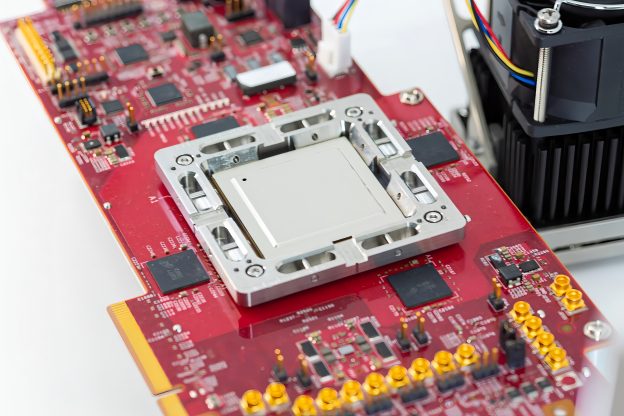
As AI infrastructure costs continue to climb, Meta is preparing to bring more of its AI computing in-house with a new generation of custom chips. According to Bloomberg, the company plans to begin deploying its latest in-house AI chip in data centers in the first half of 2027, aiming to reduce the cost and energy required to run AI models. Meta is working with Broadcom on the chip designs and TSMC on manufacturing.
Meta says the chips can run AI models more efficiently than “whatever Nvidia is currently shipping.” Twelve of the new chips arrived from TSMC on September 1, with initial performance coming within 2–3% of Meta’s simulations. On the first day, the team was able to run models from Meta, DeepSeek and Alibaba on the processors, the report notes.
The company is currently testing its third-generation AI chip, MTIA 450, also known as Arke. Its successor, MTIA 500, or Astrid, is expected to complete design work in about a month and enter data centers by the end of 2027, with Meta planning broader deployment. After Astrid, the company plans to focus future generations on improving speed and throughput, while fiber-optic technologies could provide further performance gains.
Meta Plans Large-Scale AI Chip Rollout to Cut Costs
Meta is planning deployment at significant scale, committing to more than 1 GW worth of the chips over a 12-month period and expecting the rollout to accelerate afterward. The custom silicon push comes as Meta rapidly expands its broader AI infrastructure, with Reuters reporting in July that the company aims to double its overall computing capacity to 14 GW by 2027.
All four generations rely heavily on HBM and are designed for general-purpose inference rather than workloads requiring ultrafast response times, the report adds. This focus on inference marks a shift in Meta’s custom silicon strategy. The company previously planned Olympus, a chip designed for both AI training and inference, but canceled the project partly due to cost concerns. Meta Vice President of Engineering Yee Jiun Song noted that at gigawatt-scale deployments, even a roughly 30% increase in chip costs can become difficult to justify.
Meta’s expansion comes as custom AI chips gain momentum across major cloud and technology companies. TrendForce notes that Broadcom began shipping its first ASIC for OpenAI and Google’s TPU 8i in 2Q26, while demand from its six major custom chip customers, including Anthropic and OpenAI, is expected to continue driving XPU growth.
Read more
- [News] Meta’s In-House AI Chip Push: Four New Accelerators Gear Up Amid Memory Crunch by 2027
- Top 10 Global Fabless IC Design Houses Post 73% YoY Revenue Growth in 2Q26; AMD Breaks into Top Three, Says TrendForce
(Photo credit: Meta)