[News] CXMT Completes Multiple Capital Moves, Expanding Investment and Testing Capacity
In late October, China’s leading DRAM manufacturer ChangXin Memory Technologies (CXMT) completed a series of capital moves involving the expansion of its industrial investment platforms and the development of backend testing capacity.
On October 30, ChangXin Xinyue Industrial Investment (Anhui) Co., Ltd. was established in Hefei with registered capital of CNY 900 million. Wholly owned by CXMT, the company primarily engages in investment activities using its own funds.
On October 31, the registered capital of ChangXin Xinju Equity Investment (Anhui) Co., Ltd. increased to CNY 7.884 billion. As one of CXMT’s key investment platforms, Xinju continues to expand its presence across the integrated circuit industry chain through direct investments and fund commitments.
On the same day, the registered capital of ChangXin Memory Products (Hefei) Co., Ltd. rose from CNY 6.661 billion to CNY 11.061 billion, an increase of approximately 66%. Wholly owned by CXMT, the company is responsible for developing Phase II of its backend DRAM wafer testing facility. The project carries a total investment of CNY 10.8 billion, and the latest capital injection is expected to support the expansion of DRAM wafer testing capacity.
Xinju Leads CXMT’s Expansion Across the Semiconductor Supply Chain
CXMT has primarily relied on ChangXin Xinju to conduct industrial investments.
In terms of fund investments, Xinju participated in the establishment of the Changzhi Hanhai (Shanghai) Private Equity Investment Fund, which has a total target size of CNY 3.91 billion. Xinju committed CNY 1.173 billion, representing a 30% stake and making it the fund’s largest limited partner. It has also invested in the Yangtze River Delta Collaborative Development Private Equity Fund and the Anhui New Generation Information Technology Industry Fund.
For direct investments, Xinju committed CNY 150 million to a capital increase in Aijie Kexin Semiconductor in April 2026. It also invested in Lightelligence and Z.AI, targeting AI computing chips, optical computing chips and general-purpose large language models, respectively.
CXMT has also participated in the strategic financing round of XHEART (Suzhou), extending its investment into physical AI computing chips for autonomous driving and robotics.
Further upstream, Xinju has invested in companies supplying semiconductor equipment components, thin-film materials and testing equipment, helping strengthen the supporting ecosystem for memory manufacturing. Its registered capital has increased from approximately CNY 5.633 billion at the beginning of 2026 to CNY 7.884 billion, expanding its capacity for industrial investment.
Strong Earnings Growth as Sixth-Generation DRAM Process Completes Sample Validation
In the first three quarters of 2026, CXMT reported revenue of CNY 269.024 billion, up 738.51% YoY, and net profit attributable to shareholders of CNY 132.04 billion, turning profitable from a loss in the same period last year. Third-quarter revenue reached CNY 118.714 billion, while net profit attributable to shareholders totaled CNY 54.435 billion.
The improvement was primarily driven by a global DRAM supply shortage, which boosted product sales volumes and prices. Lower unit costs also contributed to higher gross profit.
On the technology front, following a key breakthrough in its 4F² vertical-channel DRAM architecture, CXMT has completed engineering sample validation for its sixth-generation process technology platform. The company expects to begin customer sampling of its first-generation DDR5 RDIMM products based on the 4F² architecture by the end of 2026, with server applications among its initial target markets.
Meanwhile, the fifth-generation process platform has entered mass production. It increases the number of dies per wafer by at least 50% compared with the fourth generation and supports the commercialization of LPDDR6 products. The sixth-generation platform builds on these advances with further process and architecture improvements.
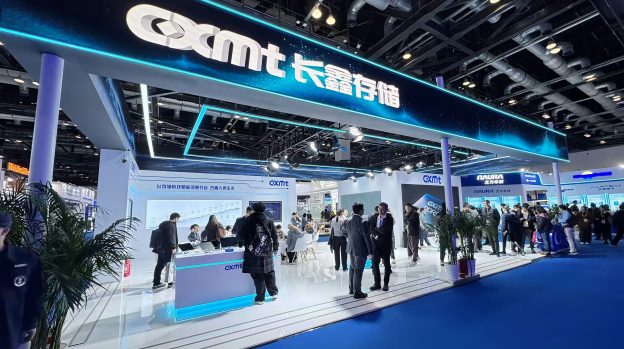
(Photo credit: CXMT)