[News] Huawei Expands LogicFolding Chips to Mate 90 Flagships, but Design Requires More Wafers
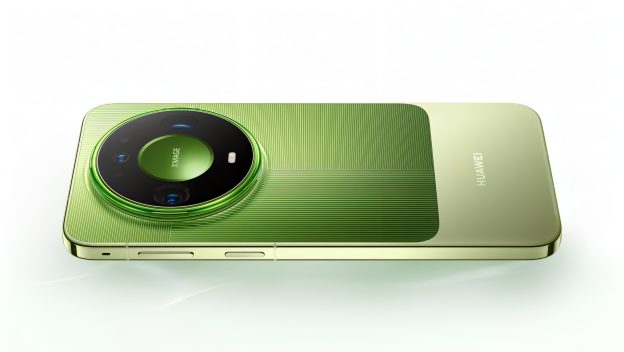
Huawei is expanding the use of its homegrown chip technologies across its latest flagship smartphones as it continues to operate under U.S. restrictions on advanced semiconductors. According to Reuters, Huawei unveiled its Mate 90 smartphone series, highlighting its in-house operating system and redesigned chip architecture as key to improving performance. Huawei rotating chairman Eric Xu also said the company plans to use more chips based on its LogicFolding architecture in future smartphones.
At the top of the lineup, Huawei is deploying its latest LogicFolding-based processors. According to the South China Morning Post, the Kirin 9050 Pro, Huawei’s most advanced processor and the same chip used in the Mate XT 2, powers the Mate 90 RS Ultimate Design and Pro Max Premium Edition. The Mate 90 Pro Max uses the slightly less powerful Kirin 9050. Both processors adopt Huawei’s LogicFolding architecture.
LogicFolding, however, does not extend across the entire Mate 90 lineup. The Mate 90 Pro uses the Kirin 9035, while the standard Mate 90 is powered by the Kirin 9030. Both chips are based on Huawei’s Tau Scaling Law but retain an older architecture rather than adopting LogicFolding, according to South China Morning Post.
Huawei also disclosed more details on the performance gains from its new chips. According to ITHome, the Kirin 9050 Pro delivers 23% higher multi-core CPU performance, 40% stronger GPU rendering performance and a 140% increase in NPU performance compared with its predecessor.
The architecture is designed to improve performance despite Huawei’s limited access to more advanced manufacturing nodes. According to a recent Bernstein report cited by South China Morning Post, the 7nm-class Kirin 9050 Pro surpassed Apple’s 3nm A17 Pro in Geekbench 6 multi-core testing. However, its single-core performance was closer to chips using TSMC’s older 4nm-class technology, while its performance remained around 30% behind Apple’s latest 2nm A20 Pro.
Advanced Chip Capacity Remains Tight
Still, LogicFolding requires more wafers to produce, Reuters notes. The added wafer requirement comes as Huawei continues to face tight advanced semiconductor capacity in China. Richard Yu, chairman of Huawei’s Consumer Business Group, said smartphone chip capacity remains constrained, while the company’s Ascend AI chips also draw on the country’s limited advanced chipmaking capacity.
Huawei has not disclosed who manufactures the Kirin 9050 Pro. SMIC, China’s largest logic foundry, is widely believed to manufacture the Kirin chips used in Huawei’s Mate smartphones as well as its Ascend AI processors, Reuters adds.
Memory Costs Add Pressure
Despite tight semiconductor capacity, Huawei currently has enough supply to meet its shipment needs, Yu said, according to South China Morning Post. However, surging memory prices are adding pressure on both Huawei and broader smartphone demand.
Yu said soaring memory prices have increased Huawei’s production costs by more than US$200 per smartphone. He added that Huawei has been hit harder than some rivals because its devices tend to use higher memory configurations, which have faced steeper price increases.
Read more
- [News] Huawei Speeds Up AI Chip Roadmap, Reportedly Pulls Ascend 960DT Forward Three Quarters to 1Q27
- [News] Huawei, Xiaomi Unveil New Foldables on Same Day With LogicFolding Kirin 9050 Pro, 3nm XRING O3
(Photo credit: Huawei)