[News] Google Reportedly Eyes Direct HBM Purchases for TPUs, Reducing Broadcom-Related Costs
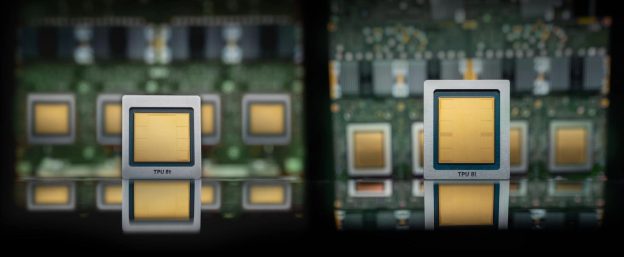
Google is reportedly moving toward direct purchases of high-bandwidth memory (HBM) for its Tensor Processing Units (TPUs), marking a potential shift away from bundled procurement arrangements with chip design partners. According to Chosun Biz, the move is part of Google’s efforts to gain greater control over AI chip costs as infrastructure spending continues to accelerate.
The shift could also have implications for major memory suppliers, including Samsung Electronics, SK hynix, and Micron. As noted by Chosun Biz, greater customer control over HBM purchasing could intensify negotiations over supply prices and contract terms, requiring memory makers to protect profitability. Although HBM shortages and existing contracts currently favor suppliers, an industry source notes that some long-term memory contracts already include price ceilings, potentially giving buyers greater bargaining power over time.
Google’s Direct HBM Procurement Could Save US$50B, Bernstein Estimates
As Chosun Biz reports, Google has traditionally relied on Broadcom for a bundled arrangement covering TPU design, packaging, and HBM procurement. The company is now reportedly diversifying its TPU supply chain through a partnership with MediaTek while moving toward direct HBM purchases. Citing an analysis by investment bank Bernstein, the report notes that this approach could reduce intermediary markups and design partner margins compared with Broadcom’s bundled model, potentially lowering Google’s overall TPU costs.
Meanwhile, Korean memory makers are pursuing opportunities in Google’s expanding TPU business. According to The Korea Herald, SK hynix has proposed jointly developing customized HBM for future Google TPUs, while Samsung Electronics is seeking opportunities through Broadcom, Google’s major TPU development partner. The report also highlights the growing importance of customized HBM as AI chipmakers seek memory solutions tailored to their processors.
Anthropic Restructures AI Infrastructure Procurement to Control Costs
Similar efforts to manage spending are extending beyond semiconductor purchasing. According to Chosun Biz, Anthropic recently outlined its “Anthropic Direct” strategy in an IPO registration statement filed with the U.S. Securities and Exchange Commission (SEC). Under the arrangement, the company directly leases AI accelerators, CPUs, HBM, and related equipment while separately contracting for data center space and operations.
This allows Anthropic to secure data center capacity, which typically requires longer lead times, while postponing costly AI accelerator investments until its computing requirements become clearer. The report adds that Anthropic expects to spend approximately US$451.6 billion on existing computing and infrastructure purchase and lease commitments through 2030.
The broader push to manage procurement costs comes as AI infrastructure investment continues to surge. According to TrendForce, combined capital expenditure among the world’s nine leading cloud service providers (CSPs) is projected to jump 106% YoY to US$957 billion in 2026, before rising another 60% to more than US$1.5 trillion in 2027.
Read more
- [News] Google Marks First 4-TPU Year with 8tx and 8i Max, as 8i Max Doubles HBM Bandwidth to Tackle Memory Wall
- CSP CapEx Projected to Exceed US$1.5 Trillion in 2027, with AI Server Revenue Growing Over 90% YoY on Higher Shipments and Prices, Says TrendForce
(Photo credit: Google)