[News] U.S. Targets China’s AI Compute Loophole, Tightens Chip Exports to Malaysia, Singapore and Three Others
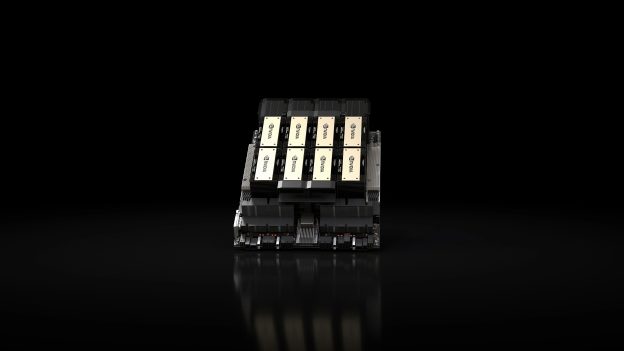
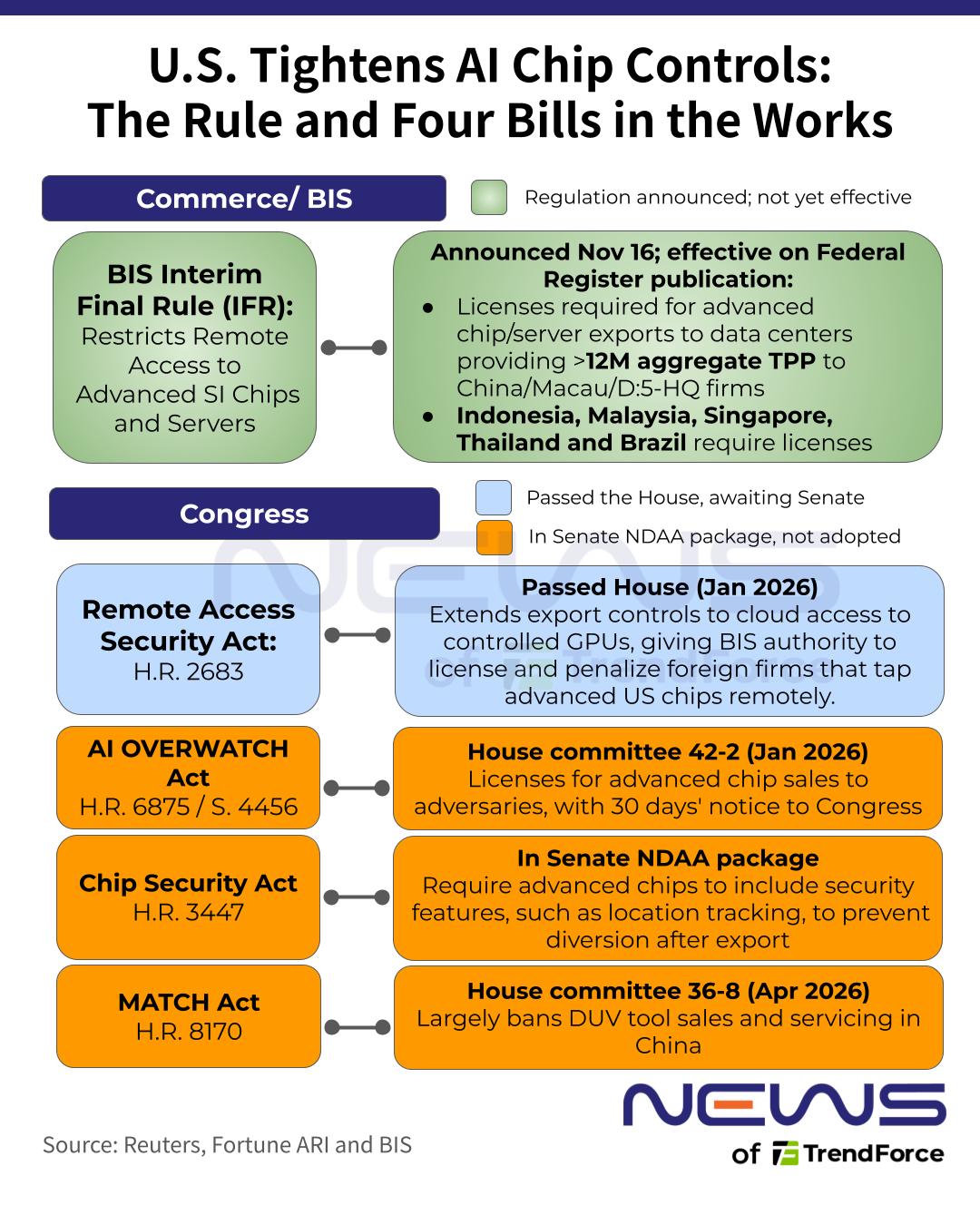
Against the backdrop of President Trump’s APEC trip and the fallout from NVIDIA’s Jensen Huang’s reported affair with former Megaspeed executive Alice Huang, Washington has tightened restrictions on China’s access to advanced U.S. AI chips. According to CNBC, citing a BIS press release, the new rules require licenses for exports, reexports and in-country transfers of covered semiconductors to Indonesia, Malaysia, Singapore, Thailand and Brazil, citing heightened risks of diversion.
The licensing requirement aims to curb Chinese customers’ remote access to data center computing capacity in those countries, according to The Wall Street Journal. Notably, U.S. companies operating data centers in those five countries are exempt from the new requirements, Reuters reports.
As highlighted by Reuters, under the rule, overseas data centers supplying substantial computing power to China-headquartered firms must secure U.S. export licenses within 90 days to maintain their services or risk future export restrictions. Citing BIS, South China Morning Post notes that the restrictions apply only to data centers exceeding 12 million in aggregate Total Processing Performance (TPP).
The licensing mandate, however, does exempt systems operated by online retailers and social media companies, which the Commerce Department considers less of a national security risk, Reuters adds.
Notably, the regulation also formally repeals a Biden-era framework that imposed licensing requirements on global access to advanced AI chips, Reuters points out. As explained by the report, the Commerce Department pledged in early 2025 to scrap and replace the Biden-era rule but did not act until Monday, during which time billions of dollars worth of restricted NVIDIA chips reached data centers serving Chinese AI firms.
Tighter U.S. Curbs Could Renew China’s Appetite for NVIDIA H200s
The latest curbs could further reshape how Chinese AI firms secure computing power. As Fortune notes, while Huawei’s Ascend processors still trail NVIDIA’s leading chips in AI training, tighter access to overseas NVIDIA-powered data centers could make the roughly 600,000 H200 chips reportedly stranded in Hong Kong an increasingly attractive alternative.
As explained by Fortune, current export controls block the most advanced AI processors—made by companies like NVIDIA, AMD, and Intel—from being sold to Chinese companies, though the Trump administration has allowed sales of NVIDIA’s H200 to approved Chinese customers. Chipmaking equipment and high-bandwidth memory are also blocked.
An AI National Team in the Making?
While tightening AI chip export controls, Washington is also moving to bolster U.S. tech giants’ overseas ambitions. According to The Wall Street Journal, NVIDIA is reportedly among more than two dozen companies poised to be named AI “national champions” under a Trump administration initiative to promote U.S. technology exports.
Expected to be announced within a week, the designation suggests Washington is pressing ahead with its AI strategy despite the upheaval at NVIDIA, the report adds. Selected firms would gain faster export license approvals, government backing for overseas operations and access to federal financing.
Other prospective national champions reportedly include Amazon, Microsoft, OpenAI and Anthropic. The initiative seeks to bundle U.S. chips, AI models and related technologies into integrated offerings, making it easier for international customers to adopt American AI solutions and compete with Chinese alternatives, according to The Wall Street Journal.
Taiwanese suppliers could also play a key supporting role. Citing industry observers, Economic Daily News highlights TSMC, King Yuan Electronics, GlobalWafers, Foxconn, Quanta, Wistron, Wiwynn, Inventec and Compal as potential beneficiaries. With U.S. manufacturing expansion spanning foundry services, chip packaging and testing, silicon wafers and electronics assembly, their growing local capacity could help underpin Washington’s AI ambitions.
Read more
- [News] China Reportedly to Allow NVIDIA H200 Imports, but Approvals May Fall Below 200K Chips
- [News] U.S. Reportedly Approves NVIDIA H200 Sales to 10 Chinese Firms Including Alibaba, ByteDance, but Deals Stall
(Photo credit: NVIDIA)