[News] Samsung, Apple Reportedly Eye Stronger Foldable Displays with Etched Ultra-Thin Glass by 2028
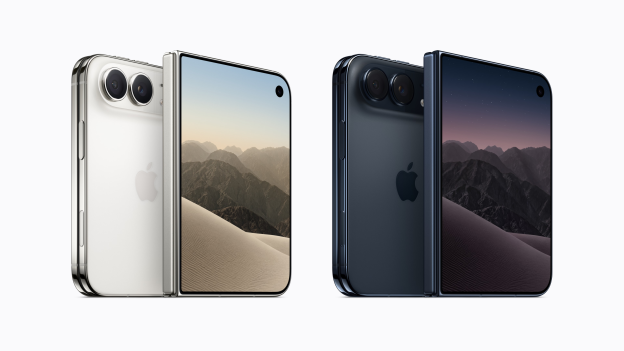
Apple’s entry into the foldable smartphone market with its first model, the iPhone Duo, is intensifying competition with Samsung Electronics, particularly in technologies aimed at improving foldable displays. According to ZDNet, citing industry sources, both companies are working with suppliers on a new ultra-thin glass (UTG) design featuring a thinner etched center and thicker non-folding sections, targeting potential adoption in 2028.
As the report explains, the new design aims to improve surface hardness while maintaining flexibility. Current foldable phones use uniformly thin UTG to enable bending, resulting in relatively low surface hardness. By selectively etching the central folding area, manufacturers could retain thicker glass in the non-folding sections while keeping the center thin enough to fold.
The companies are reportedly considering UTG with a central folding area approximately 40 micrometers (μm) thick and non-folding sections exceeding 100μm. An industry source cited by the report explained that the proposed central thickness reflects current technical limitations, as significantly thicker glass would be more likely to crack when folded.
For now, both companies use flat UTG with uniform thickness in their 2026 foldable smartphones, with the same design expected to continue in 2027. Samsung’s current lineup features 45μm UTG for the Galaxy Z Fold8 Ultra (book-style), 60μm for the Z Fold8 (passport-style), and 50μm for the Z Flip8 (clamshell-style). Apple’s iPhone Duo, meanwhile, uses a 45μm UTG cover window, the report adds.
Technical Challenges and Different Approaches to UTG
Commercializing the new design still presents challenges. Manufacturers must fill the etched central section with a suitable material while ensuring its optical properties match those of the surrounding glass, preventing visible differences across the display, ZDNet reports. An industry source expects Samsung and Apple to make a final decision on whether to adopt the technology in their 2028 foldable phones in the fourth quarter of 2027.
The two companies also differ in their use of UTG beneath the display. Apple’s iPhone Duo uses two UTG layers: an upper layer serving as the cover window above the organic light-emitting diode (OLED) panel, and a 40μm lower layer beneath the panel to help reduce display creases. Samsung, by contrast, currently uses UTG only for the upper cover window, with titanium in the area corresponding to Apple’s lower UTG layer. Samsung is also developing UTG technology for use beneath the OLED panel, the report adds.
On the supply chain front, China’s Lens Technology is a major UTG supplier for Apple’s iPhone Duo, according to Yicai. The company has also begun supplying UTG and other display materials for major customers’ foldable smartphones. Meanwhile, Apple remains dependent on Samsung Display for its foldable OLED panels. According to The Korea Herald, Samsung Display is the exclusive panel supplier for the iPhone Duo, manufacturing the displays to Apple’s specifications.
Read more
- iPhone Duo Launch Sparks Strong Demand, but Fold-Area Structural Reliability and Hardware–Software Integration Remain Challenges, Says TrendForce
- [News] Apple iPhone Duo Faces Reported Hinge Defects; Shipment Target Seen Up 44% on Strong Demand
(Photo credit: Apple)