[News] China Reportedly Obtains Smuggled HBM via Server Packages; Huawei 960DT Faces Domestic HBM Shortage
While U.S. export restrictions limit China’s access to advanced high-bandwidth memory (HBM) chips, smugglers have recently been exploiting a loophole to bring them into the country. According to The Information, citing sources, smugglers are packaging HBM chips with lower-performance server processors, taking advantage of rules that assess the packages’ computing power based on the processors rather than the memory.
Once the packages reach China, technicians heat them to soften the solder before removing the HBM stacks and discarding the processors, the report explains. The delicate process carries a high risk of damaging the memory, but the potential profits make it worthwhile for smugglers.
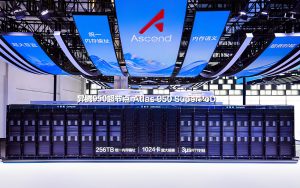
The smuggled memory reportedly often ends up with customers of Huawei Technologies, whose next-generation Ascend 960DT AI accelerator is expected to rely heavily on HBM from Samsung Electronics and SK hynix. According to The Information, domestic suppliers are struggling to meet demand. With U.S. export restrictions preventing Huawei from obtaining sufficient HBM directly from the South Korean chipmakers, the company has reportedly asked some AI chip customers to source the memory themselves.
Expected in the first quarter of 2027, the Ascend 960DT is set to double the memory bandwidth and capacity of Huawei’s current AI processor. Huawei is also working with DeepSeek to optimize the chip for AI model pre-training, a compute-intensive task for which DeepSeek previously relied exclusively on NVIDIA chips, the report adds.
China’s Memory Suppliers Struggle to Meet HBM Demand
China’s domestic memory suppliers remain unable to fill the gap. Fujian Jinhua Integrated Circuit, a U.S.-sanctioned memory maker that has supplied Huawei for years, trails its South Korean competitors technologically and lacks the capacity to meet Huawei’s customer demand, according to the report. Meanwhile, Reuters reports, citing sources, that CXMT’s HBM3E yields remain at just 20%–30%, well below the approximately 70% achieved by South Korea’s SK hynix.
HBM shortages are also pushing up Huawei’s chip prices. According to The Information, Huawei recently told some customers it was raising the suggested price of its Ascend 950DT, currently its most powerful AI chip, to more than RMB 250,000 (approximately US$37,000) amid high memory costs and tight supply. Despite delivering roughly half the raw computing performance of NVIDIA’s H100, launched in 2022, the 950DT now costs as much as the newer B200, which began shipping last year.
Other Chinese AI chipmakers face similar pressures. According to Reuters, citing sources, Cambricon has raised its indicative pricing for its next-generation 690 chip by 20%–30%, while MetaX and Iluvatar CoreX have reportedly made similar increases, highlighting the broader impact of HBM shortages on China’s AI chip industry.
China’s AI Computing Access Faces Further Restrictions
Beyond HBM shortages, Chinese companies could face additional hurdles in accessing advanced AI computing resources. According to Financial Times, citing sources, NVIDIA has told cloud computing customers that at least 51% of their services must be sold to non-Chinese companies, requiring its data center partners to reduce their exposure to Chinese customers. The move could further complicate China’s AI ambitions as Washington seeks to restrict access to advanced U.S. chips through overseas cloud computing services.
Read more
- [News] CXMT Reportedly Ships HBM3E Samples, Eyes Production Within 2 Months Despite 20–30% Yields
- [News] Chinese AI Chipmakers Reportedly Hike Prices on HBM Costs, Huawei 950DT Up as Much as 50%
(Photo credit: FREEPIK)