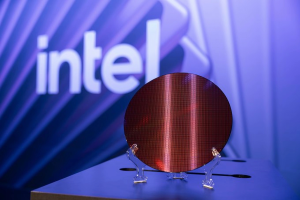
[News] UMC Reportedly Wins Photonic Integrated Circuit Orders; Initial Orders Up to 10K Wafers at 7× CMOS Pricing

UMC is expanding its presence in the high-speed optical interconnect market as demand for silicon photonics chips grows. According to Economic Daily News, the company has reportedly secured major photonic integrated circuit (PIC) orders from Zhongji Innolight and Tencent-backed SILITH, with initial orders potentially totaling up to 10,000 wafers. Production is expected at UMC’s Singapore facility, with additional orders possible.
The products reportedly command prices seven times those of conventional CMOS processes, potentially boosting UMC’s profitability, the report notes. UMC is also said to be the first Taiwanese foundry capable of offering both volume production and cost advantages for key optical communication chips. The company declined to comment on specific customers or reported orders.
Zhongji Innolight is a leading global supplier of data center optical transceiver modules, serving major North American cloud service providers (CSPs) and the AI market. The company is expanding its 800G and 1.6T optical module businesses, according to the report. Meanwhile, SILITH specializes in silicon photonics PIC design, with cumulative shipments of 100G and 200G per-channel PICs exceeding 8 million units, the report adds.
UMC has also announced plans to expand silicon photonics production at its P4 facility in Singapore and develop new P7 and P8 facilities at Southern Taiwan Science Park. The company targets long-term PIC capacity of 18,000 wafers per month, with equipment installation expected to begin in late 2028 and full capacity targeted for 2030. Major customers have reportedly begun discussions over future capacity allocations, according to Economic Daily News, citing industry sources.
Rising Optical Demand Creates Opportunities for UMC
UMC recently reached a milestone in the validation of its 1.6T optical transceiver platform by multiple hyperscalers, according to MoneyDJ. Its technology roadmap targets 300G and eventually 400G per lane, incorporating hybrid bonding and chip-to-wafer integration for next-generation optical interconnects, the report adds.
PICs enable the conversion between optical and electrical signals and are key components in high-speed optical modules. Only a limited number of foundries worldwide have mass-production capabilities, including Tower Semiconductor and GlobalFoundries, whose capacity is reportedly fully booked, Economic Daily News notes. UMC’s specialized processes and cost advantages could help it capture a larger share of this growing market and strengthen its position in the AI optical interconnect supply chain.
Read more
- Optical Fiber Spot Prices Surge Severalfold in 2026, with Data Center-Driven Supply Shortages Expected to Persist Through 2028, Says TrendForce
- [News] Samsung May End UMC’s Galaxy DDI Exclusivity by Adding GlobalFoundries as Mature-Node Capacity Tightens
(Photo credit: UMC)