[News] Musk Says China Is Rapidly Advancing in LPDDR5/LPDDR6, Highlights Its Mass Production Capabilities
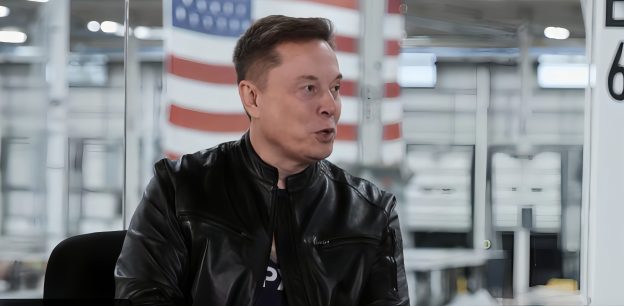
China’s memory industry is making rapid advances, raising questions about its potential impact on global competition. According to UDN News, Elon Musk suggested in a post on X that RAM could be the next sector to face intense competition from China’s large-scale manufacturing capabilities, although advanced memory technologies remain harder to master. Musk noted that once China masters a manufacturing technology, its ability to scale production often exceeds that of the rest of the world combined, citing lithium batteries and solar panels as examples.
Musk also noted that memory was a low-margin commodity business just three years ago. With LPDDR5 and LPDDR6 following common industry standards, he suggested that China appears to be rapidly mastering the relevant technologies. However, newer HBM architectures, SRAM (static random-access memory) layers beneath logic layers, and 3D-stacked RAM above logic layers, particularly the challenge of managing heat, remain more difficult technical hurdles, the report notes.
Musk also cited SpaceX as an exception, noting that it delivers roughly an order of magnitude more mass to orbit than all other launch providers combined. Even so, China accounts for the majority of orbital mass delivered by non-SpaceX providers, leading Musk to describe SpaceX as “an anomaly in the matrix,” according to Wallstreetcn.
CXMT Details 4F² DRAM Plans as China Targets AI Server Memory
Musk’s comments come as Chinese memory maker ChangXin Memory Technologies (CXMT) details plans for its next-generation DRAM technology. According to Yicai Global, CXMT President Cao Kanyu introduced the company’s 4F² DRAM architecture at the Integrated Circuits and Chiplet Conference on October 10, with plans to launch DDR5 registered DIMMs (RDIMMs) based on the technology by the end of 2026.
According to Seoul Economic Daily, the 4F² architecture can reduce DRAM cell area by approximately 33% compared with the conventional 6F² structure, allowing more data to be stored on a chip of the same size. SK hynix disclosed its 4F² roadmap in 2025, while Samsung is reportedly targeting mass production of sub-10nm DRAM using the architecture in 2028, putting CXMT’s announced timeline roughly two years ahead.
CXMT’s decision to adopt 4F² first in DDR5 RDIMMs rather than LPDDR also signals its focus on the more technically demanding server memory market. However, South Korean industry officials caution that the scope of its application remains uncertain and that demonstrating the technology does not guarantee reliable mass production at scale, Seoul Economic Daily notes.
Beyond its technology plans, CXMT has also expanded its presence in the global DRAM market. According to TrendForce, CXMT ranked fourth in global DRAM revenue in 2Q26, with its market share rising to 9.5% from 7.6% in the previous quarter, behind Samsung (39.4%), SK hynix (24.9%), and Micron (23.3%).
Read more
- [News] CXMT Accelerates 4F² DRAM Push, Eyes Year-End Server DDR5 RDIMM Launch
- [News] NAND Leaders Bet on Taiwan’s DRAM Maker: Why Kioxia, SanDisk, SK hynix Back Nanya Tech’s $2.5B Deal?
(Photo credit: Elon Musk on X)