[News] NVIDIA Chooses Monolithic Die Over Chiplets for Vera CPU, Claims 2× x86 Performance in Agentic AI
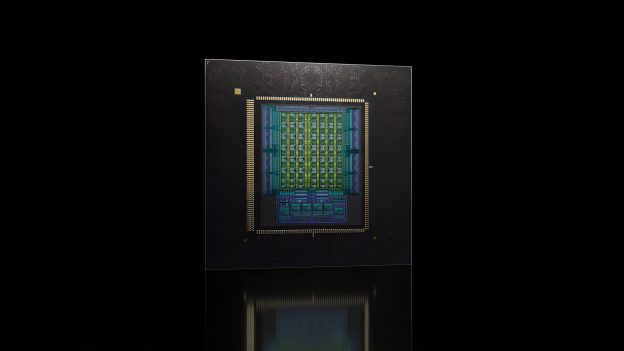
The rise of agentic AI is reshaping CPU design priorities. According to Wccftech, which interviewed NVIDIA’s Vera team, the company has chosen a monolithic compute die for its Vera CPU over the chiplet architectures used by major x86 competitors. Vera also features a custom LPDDR5X memory subsystem and NVIDIA’s second-generation Scalable Coherent Fabric.
As the report explains, unlike traditional cloud workloads that prioritize high core counts and throughput, agentic AI requires strong single-threaded performance, high memory bandwidth, and low latency to execute sequential tasks quickly and keep GPUs highly utilized.
The monolithic design allows CPU cores to communicate without crossing the boundaries between separate chiplets, reducing data movement latency. According to the report, NVIDIA says Vera delivers 3.4 TB/s of bisection bandwidth, three times that of the leading x86 processor used in its comparison, allowing cores to communicate more quickly when working with shared data.
Vera Targets Faster Agentic AI Workloads
NVIDIA says Vera delivers 1.5 times the performance of its predecessor, Grace. For agentic workloads involving sequential tasks such as Python scripting and code compilation, the company claims up to twice the performance of leading x86 processors, with a 1.6-times advantage on a geometric-mean basis, according to Wccftech.
Vera also introduces NVIDIA’s Spatial Multithreading technology, which allocates dedicated resources to worker and I/O threads to prevent background operations from interfering with primary processing tasks. As Wccftech notes, NVIDIA says the approach helps maintain a more consistent balance of computing resources under heavy workloads.
Beyond chip architecture, NVIDIA is expanding Vera’s role in AI infrastructure. According to the report, the company initially positioned its Grace CPU primarily as a host processor for GPU systems, but growing demand for agentic AI and reinforcement learning has prompted a shift toward standalone Vera CPU racks. NVIDIA sees these systems handling large volumes of AI agent tool calls and other CPU-intensive tasks, reflecting the growing importance of CPUs in AI infrastructure.
NVIDIA Denies RTX 5090 Discontinuation Rumors
Meanwhile, NVIDIA has dismissed rumors that it plans to discontinue its flagship GeForce RTX 5090 graphics card despite ongoing supply constraints. According to Central News Agency, NVIDIA Senior Vice President of Personal Computing Jeff Fisher denied the reports during an interview in Taiwan, calling them untrue and stressing that the RTX 5090 remains a key product that NVIDIA will continue to supply.
Fisher acknowledged that supply constraints are affecting the global industry, not just NVIDIA, but said the company is doing everything possible to bring products to market, CNA notes. TechPowerUp adds that the RTX 5090 remains difficult to find near its US$1,999 manufacturer’s suggested retail price (MSRP), with some listings on Amazon and Newegg exceeding US$8,000.
Read more
- [OCP in Focus] Lisa Su Calls 2026 “Year of Inference” as AMD Lifts 2030 CPU TAM Forecast to $200B+
- [News] NVIDIA, Cisco Target 4× Bandwidth Density With 400G USFP Optical Module; Taiwan Suppliers Eye Gains
(Photo credit: NVIDIA)