[News] Global Banks Reportedly Push Southeast Asian Data Center Clients to Reveal AI Chip Users Amid U.S. Curbs
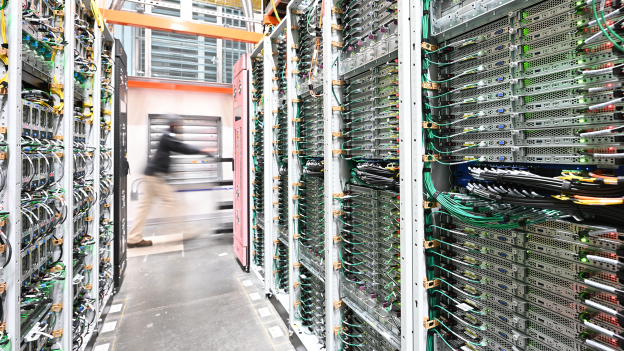
The impact of U.S. AI chip export controls is spreading to the financial sector, with global banks tightening scrutiny of data center clients in Southeast Asia. According to Bloomberg, citing sources, Citigroup and Standard Chartered have launched extensive reviews of their data center clients following the introduction of stricter U.S. rules aimed at curbing Chinese companies’ access to advanced U.S. chips in the region.
The banks join Singapore’s three major lenders, DBS, Oversea-Chinese Banking Corp. (OCBC), and United Overseas Bank (UOB), in pressing data center clients across Singapore, Malaysia, and other Southeast Asian markets for greater disclosure. A similar review is underway at Maybank, Malaysia’s largest bank. In a separate Bloomberg report, Maybank Investment Bank CEO Michael Oh-Lau said the bank is reviewing its portfolio for potential exposure to the latest U.S. chip curbs and will engage with clients to assess their ability to proceed with existing financing plans.
As Bloomberg notes, banks are seeking greater transparency about who ultimately uses the AI chips and requesting documentation demonstrating compliance with the U.S. Commerce Department’s tightened export controls. Neocloud providers, which purchase chips and lease computing capacity, are drawing particular attention. Private equity firms, which have helped finance much of Asia’s data center expansion, are also coming under closer scrutiny.
While publicly available data remains limited, analysts estimate that 30% to 45% of Malaysia’s data center capacity is tied to Chinese demand, according to Bloomberg. Although data centers also serve domestic and Western clients, Chinese companies seeking overseas access to advanced chips for AI training represent the fastest-growing and more lucrative customer segment, the report notes.
Southeast Asian Data Centers Face Financing and Regulatory Hurdles
The impact of the new restrictions is already being felt in financing deals. In a separate report, Bloomberg revealed that lenders had suspended work on a US$480 million loan sought by Singapore-based neocloud provider Aolani Cloud. The financing was intended to fund purchases of NVIDIA GPUs for a data center in Malaysia, with ByteDance set to remotely access the computing power. Aolani said it is working with regulators and financing partners to ensure the project complies with the new rules.
The tightening U.S. restrictions also raise questions about Southeast Asia’s broader data center expansion, particularly in Malaysia. According to Reuters, the country has attracted nearly US$100 billion in data center investment since 2021 and plans to notify all 117 approved data center projects of the new U.S. rules to ensure compliance.
Malaysia is already taking steps to address the latest U.S. restrictions. According to a separate Bloomberg report, the Malaysian Investment Development Authority (MIDA) is preparing to advise data center operators against providing services to seven companies recently added to the U.S. Entity List, including Megaspeed International and its Malaysian subsidiary Speedmatrix. The country is also drafting legislation that would require the disclosure of data center locations, operator and hyperscale customer identities, GPU imports, and electricity consumption, the report adds.
Read more
- [News] U.S. Chip Curbs Hit Southeast Asia GPU Rental Financing; ByteDance-Linked US$480M Loan Reportedly Paused
- [News] TSMC, Samsung Reportedly Pause China Consumer Chip Shipments Under New U.S. Rules; 16nm Orders Affected
(Photo credit: AWS)