[News] Samsung Reportedly to Complete Xi’an Fab Upgrade for V9 NAND by Late 2027 amid Rising AI SSD Demand
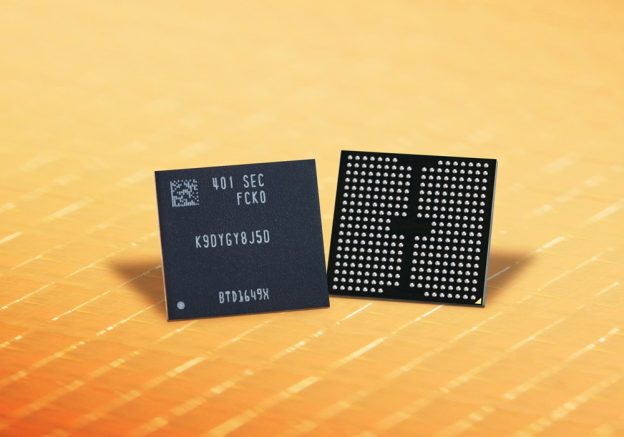
Samsung Electronics is accelerating the transition to more advanced NAND flash production in China as AI data centers drive demand for enterprise storage. According to Seoul Economic Daily, citing industry sources, Samsung plans to upgrade its facilities in Xi’an, China, to increase production of ninth-generation vertical NAND flash (V9) for enterprise solid-state drives (eSSDs). Monthly V9 production capacity at its second Xi’an fab (X2) is expected to increase fivefold, from approximately 10,000 to 50,000 300mm wafers.
As part of the upgrade, Samsung reportedly plans to dedicate all upgraded production lines at X2 to V9, while converting 20–30% of its existing V6 production lines to the newer generation. The company also plans to establish an electroplating line in X2’s unused cleanroom space, with equipment move-in scheduled for around February 2027 and production line conversion targeted for completion by November 2027.
The planned upgrades highlight Xi’an’s importance in Samsung’s NAND manufacturing network. According to Seoul Economic Daily, citing industry sources, Samsung’s two Xi’an fabs, X1 and X2, had a combined monthly wafer input capacity of 100,000 wafers as of 2Q26, with 50,000 wafers each. By comparison, its four Pyeongtaek fabs had a combined capacity of 200,000 wafers per month. Xi’an thus accounts for roughly one-third of the total capacity across the two campuses.
Notably, as Reuters previously reported, Samsung said its facility upgrade complies with U.S. export regulations and aims to meet growing global demand, including from U.S. customers, without expanding production capacity or building new facilities.
Samsung is not alone in pursuing advanced NAND production in China. Reuters also reports that SK hynix is seeking to upgrade its Dalian facility from 192-layer NAND to at least 240 layers, as both South Korean memory makers look to meet rising AI demand and counter growing competition from China’s Yangtze Memory Technologies (YMTC).
Samsung’s V9 NAND Transition Supports Its eSSD Leadership
Featuring 286 layers, 50 more than its predecessor, V9 NAND offers approximately 50% higher TLC storage density and 33% faster data input/output speeds of up to 3.2 Gbps, making it well suited to AI data center storage, Seoul Economic Daily notes. Samsung has already adopted V9 in its PM1763 enterprise SSD, which entered mass production in July.
Higher yields further support the transition. Yields for some V9 NAND products have reportedly reached the low 90% range, around 10 percentage points above the previous generation’s low-to-mid 80% range, helping improve profitability, the report adds.
The production shift comes as Samsung strengthens its position in the global enterprise SSD market. According to TrendForce, Samsung leads the market with a 35.1% market share by revenue in 2Q26, followed by SK hynix Group at 21.1% and Micron at 17.1%. Its lead over SK hynix Group widens from approximately 12 percentage points in 1Q26 to 14 percentage points in 2Q26.
Read More
- Higher Prices and Shipments Drive Top Five Enterprise SSD Vendors’ Revenue to Nearly US$37.59 Billion in 2Q26, Says TrendForce
- [News] Samsung, SK hynix Reportedly Push China NAND Upgrades Beyond 200 Layers as YMTC Competition Heats Up
(Photo credit: Samsung)